South Korea · Korea Strait
Jeju Island
Temperate diving is generally most comfortable and active during the warmer months.
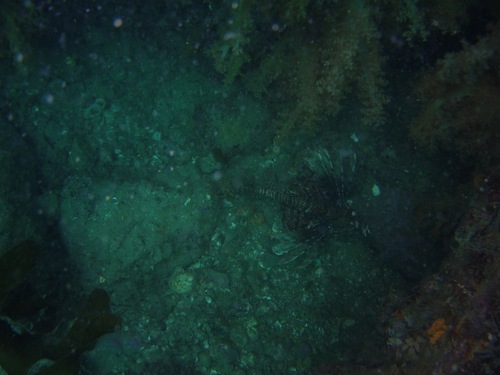
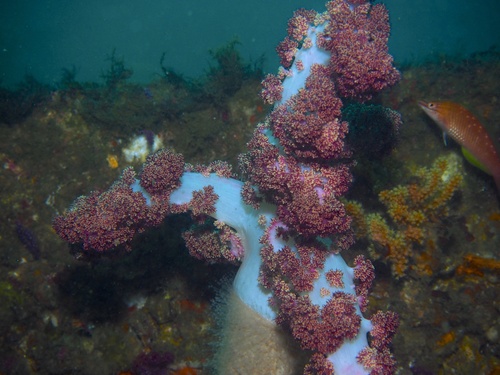
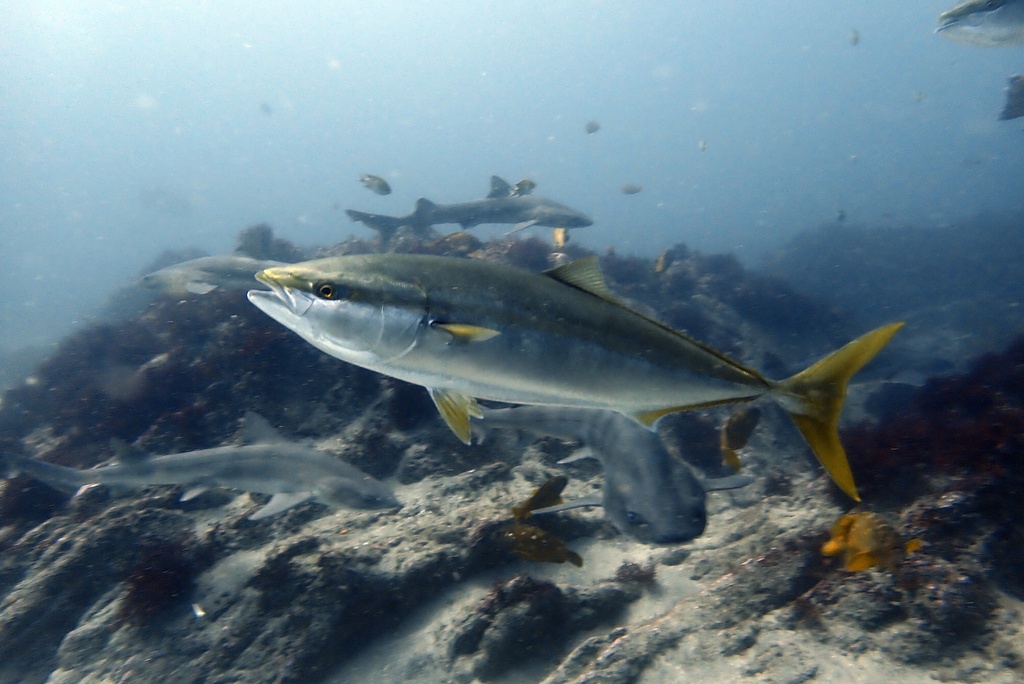
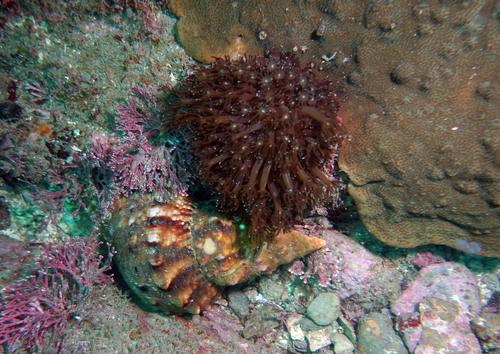
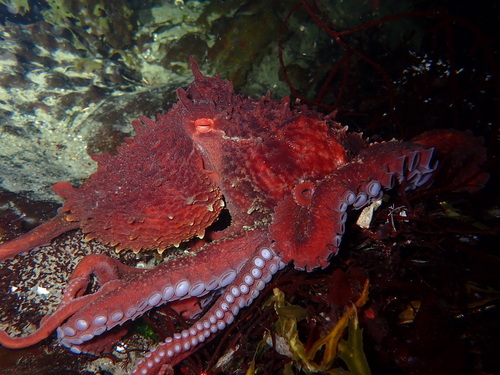
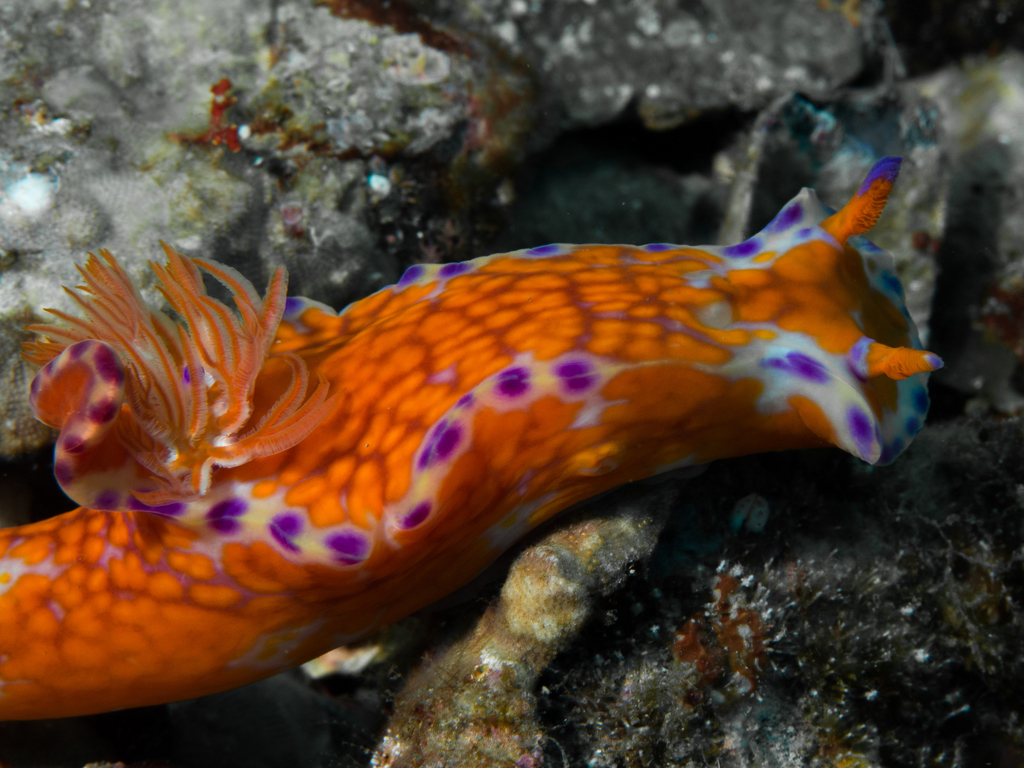
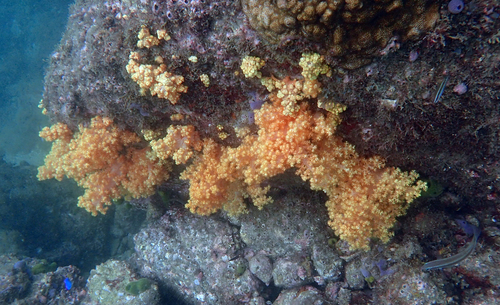
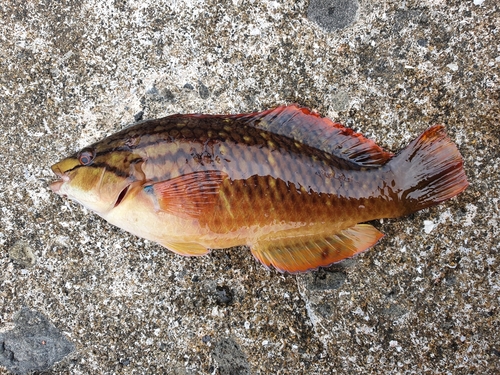
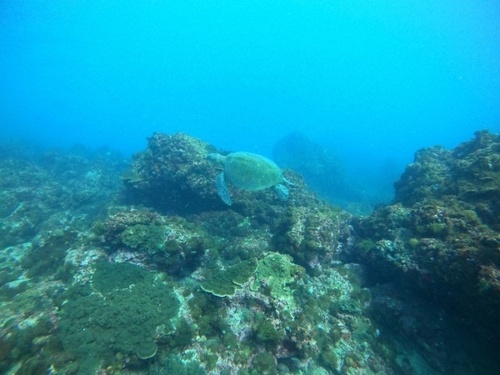
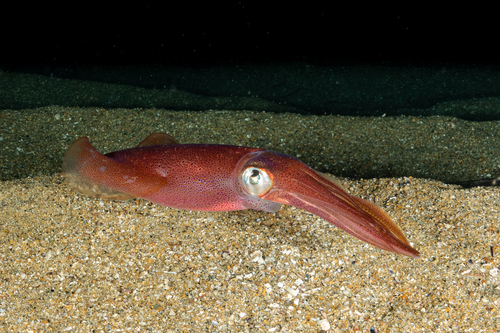
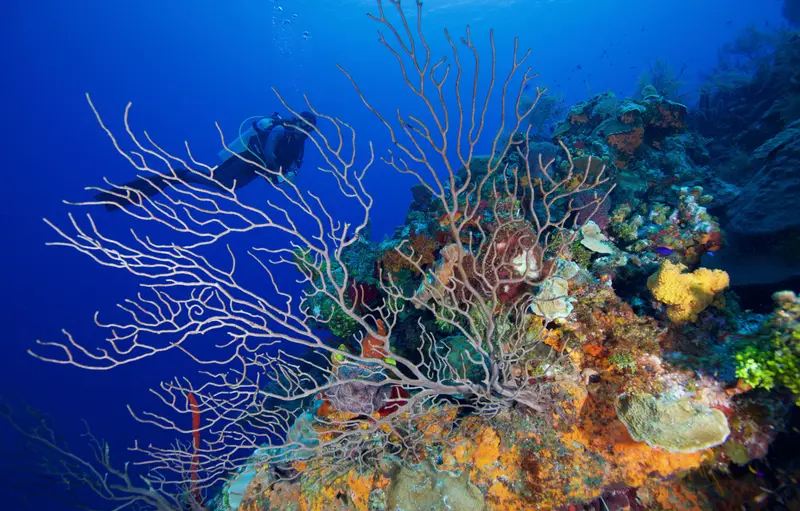
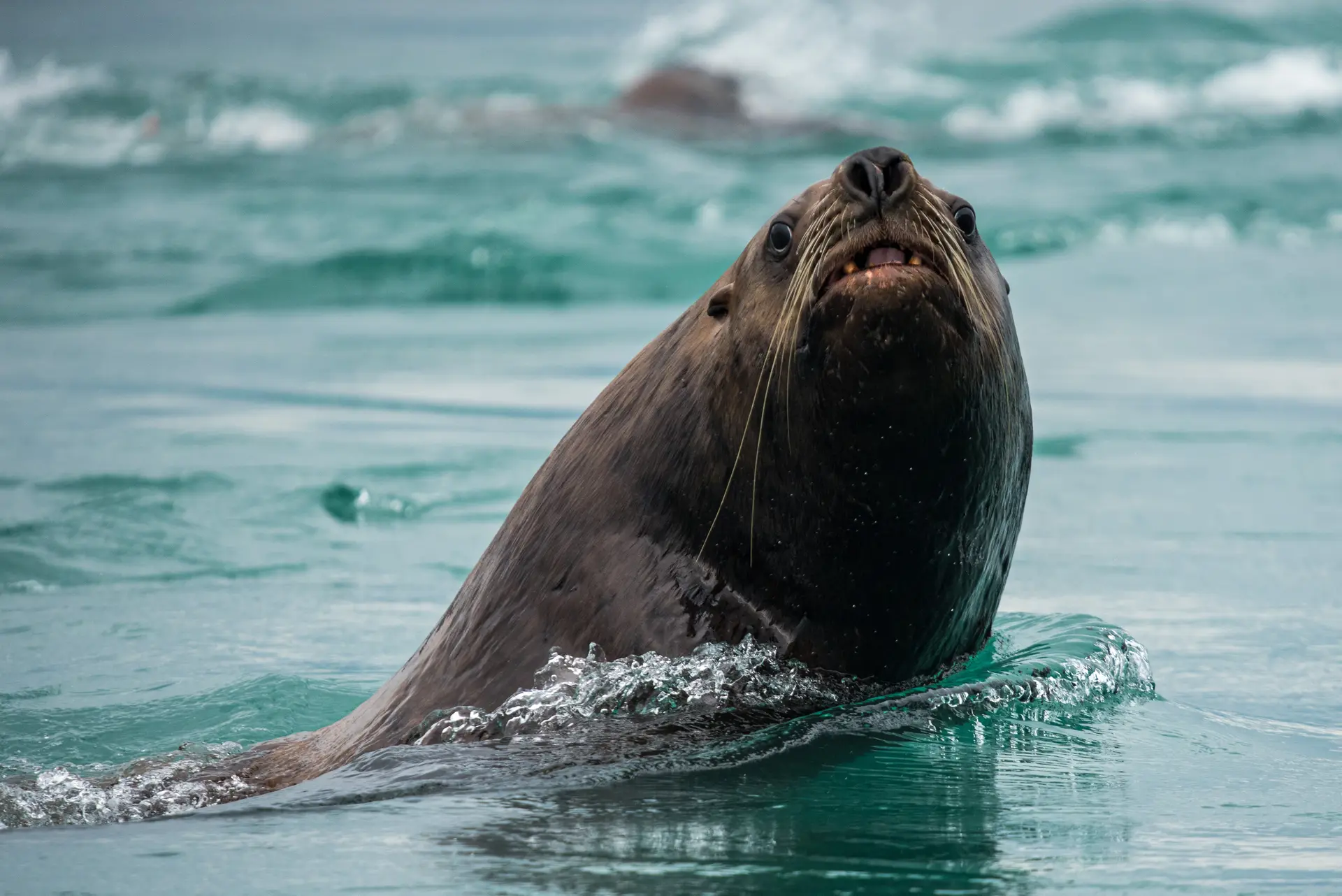
Jeju is South Korea's largest island, volcanic, and the country's only meaningful diving destination — kelp forests, lava tubes, basalt walls, and a soft-coral ecosystem unusual at this latitude. Cold water and freediving haenyeo (sea-women) culture add cultural texture.
Good season
July–October is warmest (22–26°C) with best viz. Winter drops to 14–17°C.
Trip duration
3–4 nights as part of a Korea trip.
Dive style
Shore and boat diving on volcanic topography; mild current.
Dive level
Open Water; Advanced helps for lava-tube sites.
Reef health
What you’ll actually findSome loss since the 2010s, but the reef still has plenty to dive. Pick depth and shoulder-season carefully.
Coral reef health
How is this calculated?Heat stress right now
No abnormal heat right now. Corals stay coloured.
NOAA Coral Reef Watch · updated May 2026 · 0 °C-week heat dose
What to expect on a dive
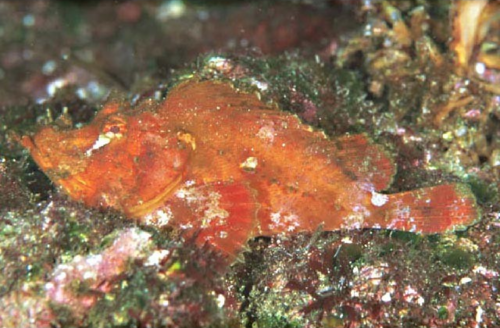
Subtropical Korean island reef. Coldwater-influenced ecosystem; soft coral on the rocks.
Sources, methodology, and the raw numbers
Raw observed numbers
- Coral cover: 30% (survey Sep 2024, Local temperate-reef benthic transect)
- Bleached: 2%
- Recent mortality: 1%
- Temperate reef — observed condition reflects the stable regional pattern.
Raw thermal numbers
- NOAA CRW alert level: No stress
- Degree Heating Weeks: 0 °C-wk
- SST anomaly: +2 °C
How we summarise this
Observed coral cover, bleaching, and mortality come from named in-situ surveys with a stated date and method — they describe one snapshot of one reef and do not extrapolate to neighbouring sites. Current thermal stress is satellite-derived from NOAA Coral Reef Watch at ~5 km resolution; it indicates risk, not observed coral damage. We deliberately separate observed condition, current thermal stress, and projection — and we never publish a projection without a documented model and uncertainty.
Sources
- Reef Life Survey — Reef Life Survey Foundation
- NOAA Coral Reef Watch — U.S. National Oceanic and Atmospheric Administration
- AIMS Long-Term Monitoring Program — Australian Institute of Marine Science
- Global Coral Reef Monitoring Network — GCRMN / ICRI
- Atlantic and Gulf Rapid Reef Assessment — AGRRA Program / Perry Institute for Marine Science
- NOAA National Coral Reef Monitoring Program — NOAA Coral Reef Conservation Program
- Reef Check — Reef Check Foundation
- NOAA CoastWatch / OceanWatch — NOAA NESDIS / STAR
- Allen Coral Atlas — Arizona State University Center for Global Discovery and Conservation Science
- Great Barrier Reef Marine Park Authority — Australian Government
- International Coral Reef Initiative — ICRI Secretariat
- NASA PO.DAAC — NASA Jet Propulsion Laboratory / Caltech
- Copernicus Marine Service — Mercator Ocean International for the European Union
- NASA Ocean Color (OB.DAAC) — NASA Goddard Space Flight Center / Ocean Biology Processing Group
- Argo float network — International Argo Program / UCSD
- CoralWatch — University of Queensland
- IMOS / AODN — Integrated Marine Observing System / Australian Ocean Data Network
- WRI Reefs at Risk Revisited — World Resources Institute
- Ocean Health Index — OHI partnership (Conservation International + UCSB + NCEAS)
- IPCC Special Report on the Ocean and Cryosphere (SROCC) — Intergovernmental Panel on Climate Change
- GOA-ON — Global Ocean Acidification Observing Network — GOA-ON Secretariat + IOC-UNESCO
- HAEDAT — Harmful Algae Event Database — IOC-UNESCO Intergovernmental Panel on Harmful Algal Blooms
- NCEI Marine Microplastics — NOAA National Centers for Environmental Information
Reef condition changes year to year. If you visit, consider supporting responsible-travel and conservation operators on the ground.
Pressure on this reef
Protection · fishing · what you can doProtected-area status
Multi-use MPAInside a designated MPA that permits regulated fishing and other uses. Worth checking which zones at this location are no-take.
Fishing pressure
Moderate fishing pressureDominant pressures
- coastal development
- fisheries
1 Green Fins-verified operator known at this location.
What you can do
Subtropical reefs with limited formal MPA coverage. Choose operators that pay into local fisher cooperatives.
Protection status sourced from Protected Planet / WDPA and refined with Marine Protection Atlas. Fishing pressure proxy is Global Fishing Watch AIS data. See the methodology for what these sources can and can’t prove.
Dive sites here
1 curatedGear
What to bringWhat divers say
“Diving Jeju and watching the haenyeo work the same coastline by lung power was a humbling combination.”