Tubbataha Reefs
Philippines · Sulu Sea
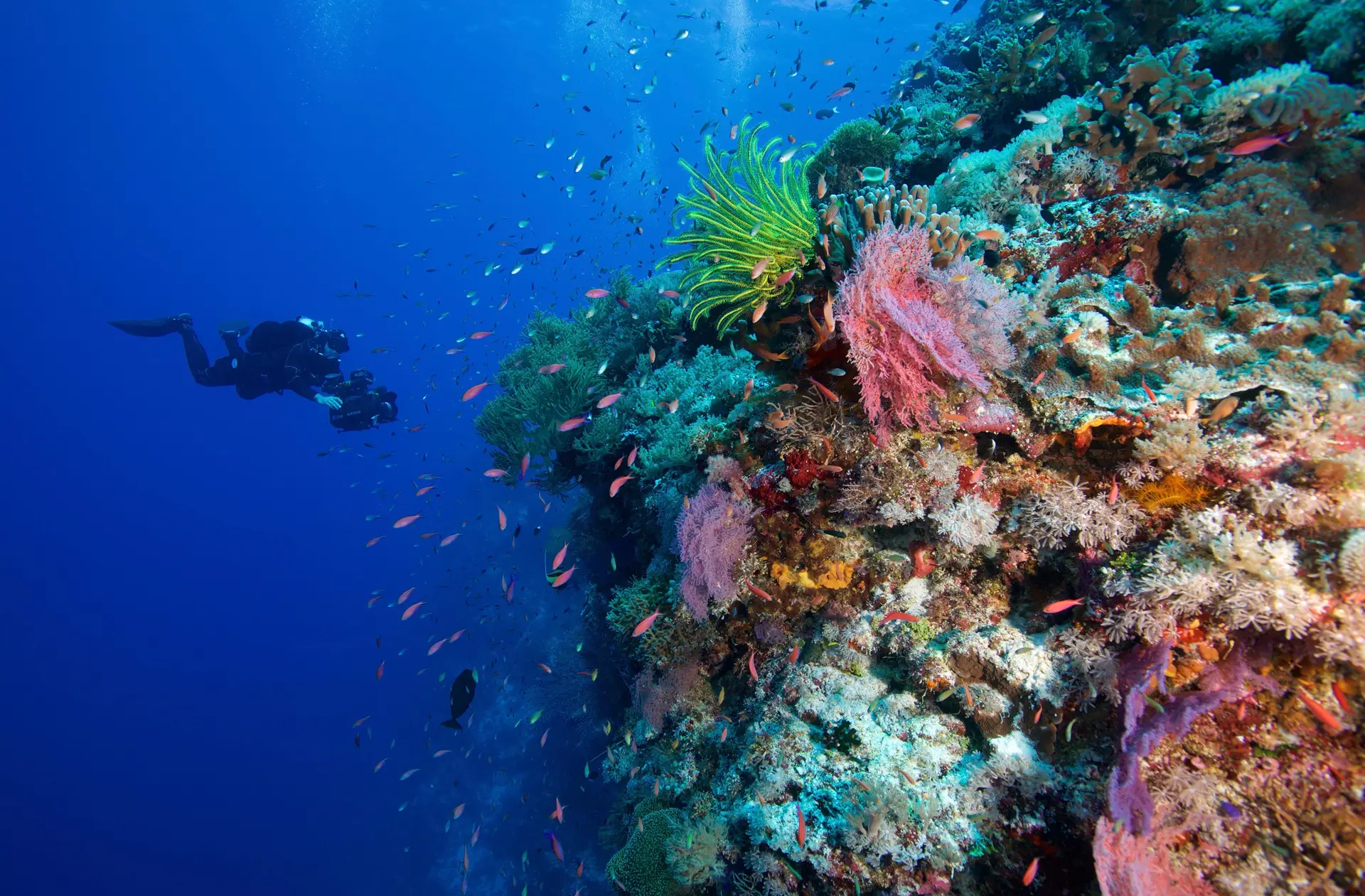
A UNESCO marine park 150km offshore in the middle of the Sulu Sea, Tubbataha is reachable only by liveaboard during a tight 3-month window. Two atolls and a small reef bracket pristine walls that drop into deep blue, with reliable encounters with grey reef sharks, jacks, tuna and the occasional whale shark, hammerhead or thresher.
Tubbataha Reefs Natural Park
Platinum tier · Awarded 2017
How this reef is doing
ⓘ How we measure thisReef state
Reef fish biomass inside this fully protected park is the highest recorded among Philippine reefs and several times that of the fished and open areas outside, which hold only a fraction of it (Muallil et al. 2019).
Coral cover
Fish life
Heat
Warmer than usual right now, but not hot enough to bleach.
Fishing
Quiet water, and fishing is fully banned here.
Sources · Reef Check surveys · NOAA Coral Reef Watch · Global Fishing Watch and reef gravity
Coral cover over time
Live coral cover, by survey year
Across surveys in 2014 and 2024, live coral cover here has fallen from 50% to 47%. Every point is a real survey reading, never a projection.
Live coral cover, percent by year
| Year | Coral cover |
|---|---|
| 2014 | 50% |
| 2024 | 47% |
What you will see
28 species across the dive sites here
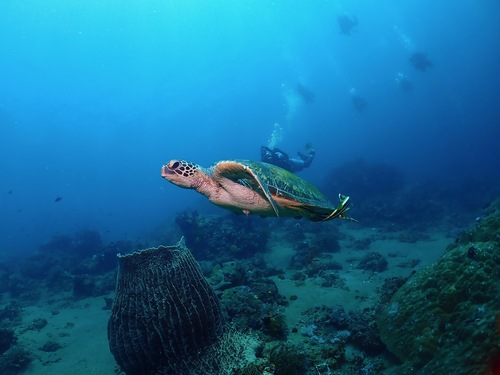
Green Sea Turtle
Seen 3 months ago
at Coron Bay
Least concern
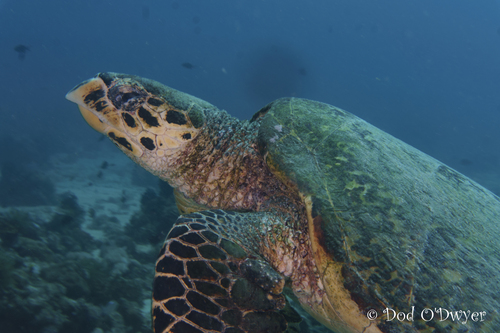
Hawksbill Sea Turtle
Seen 3 months ago
at Coron Bay
Critically endangered
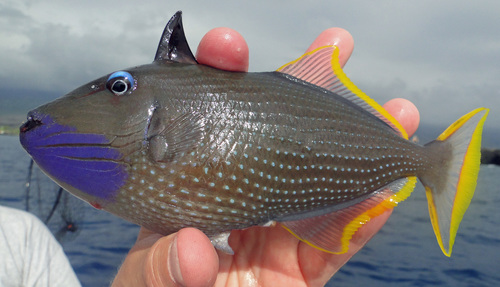
Gilded Triggerfish
Seen 4 months ago
at North Atoll Wall
Least concern
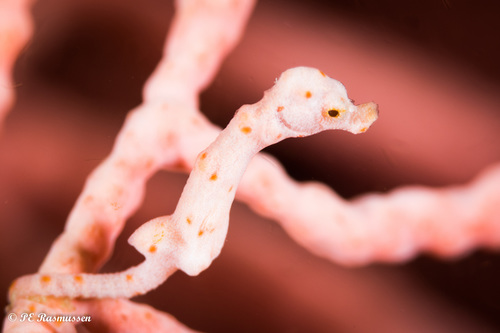
Denise'S Pygmy Seahorse
Seen 4 months ago
at North Atoll Wall
Least concern
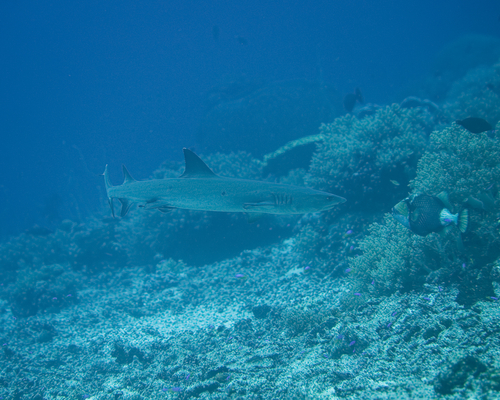
Whitetip reef shark
Seen 4 months ago
at Jessie Beazley Reef
Vulnerable
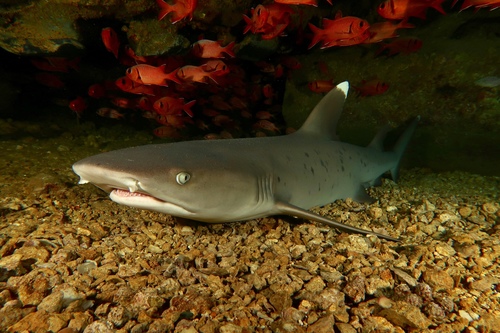
White-tip reef shark
Seen 4 months ago
at Shark Airport (North Atoll)
Vulnerable
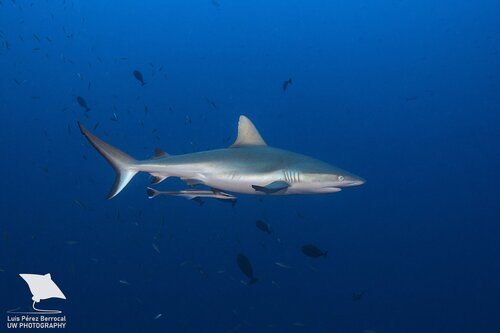
Grey reef shark
Seen 4 months ago
at Shark Airport (North Atoll)
Endangered
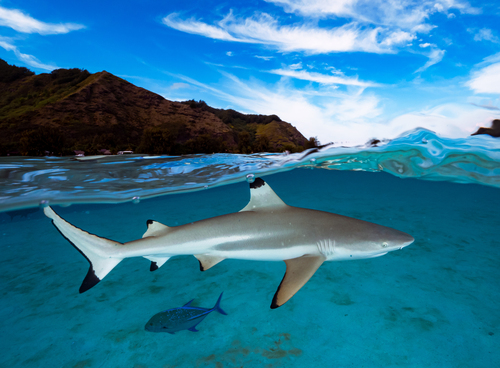
Reef shark
Seen 5 months ago
at Shark Airport (North Atoll)
Vulnerable
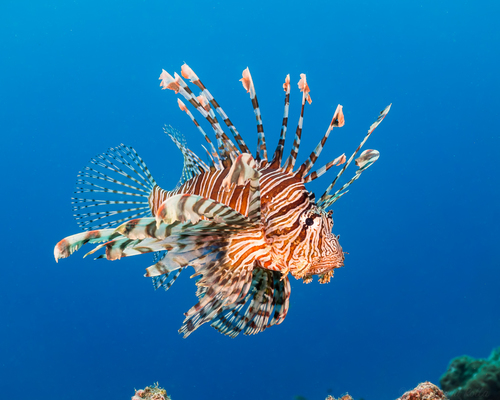
Lionfish
Seen 6 months ago
at Coron Bay
Least concern
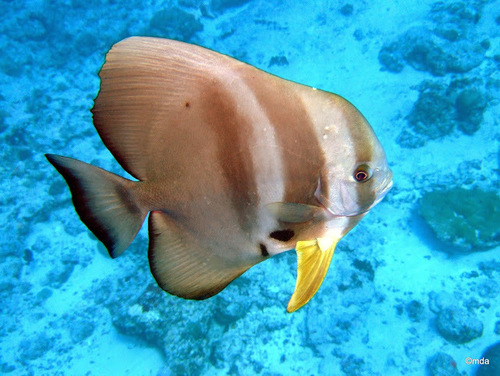
Batfish
Seen 6 months ago
at Coron Bay
Least concern
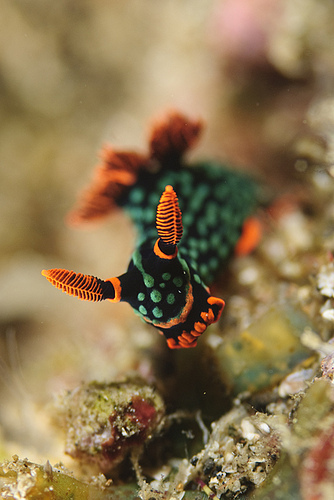
Nudibranch
Seen 9 months ago
at Coron Bay
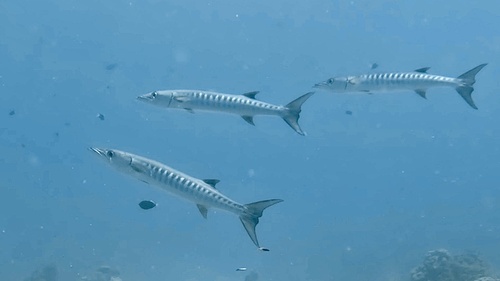
Schooling barracuda
Seen Jun 2025
at Jessie Beazley Reef
Least concern
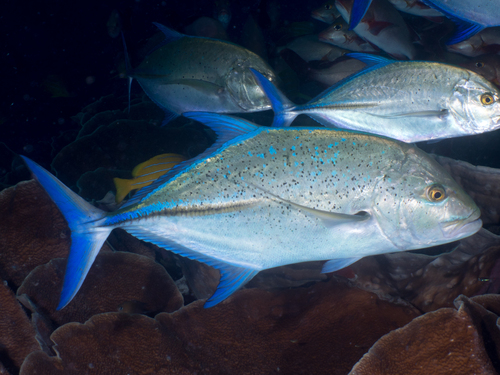
Bluefin Trevally
Seen Jun 2025
at Shark Airport (North Atoll)
Least concern
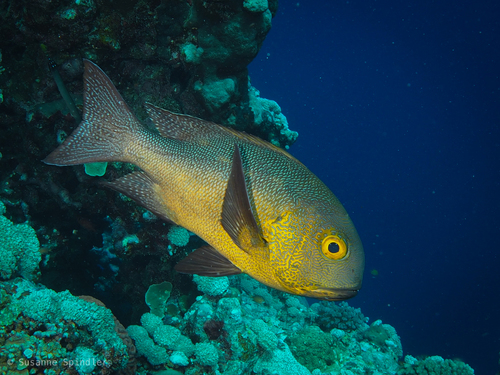
Midnight Snapper
Seen Jun 2025
at Shark Airport (North Atoll)
Least concern
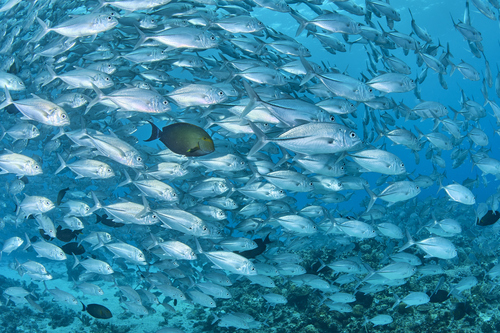
Bigeye trevally
Seen Jun 2025
at Jessie Beazley Reef
Least concern
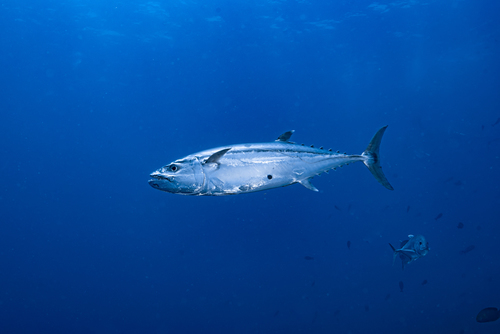
Dogtooth tuna
Seen Jun 2025
at North Atoll Wall
Least concern
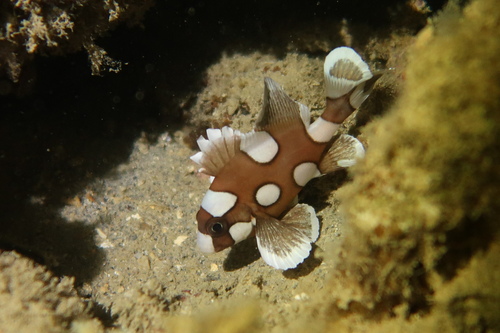
Harlequin Sweetlips
Seen Jun 2025
at Shark Airport (North Atoll)
Least concern
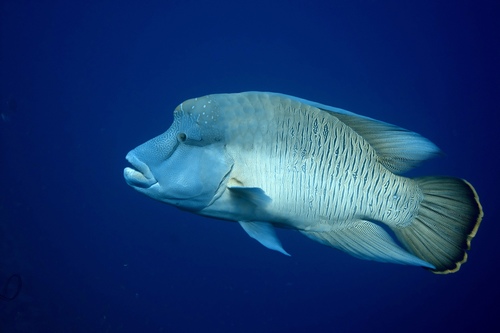
Napoleon Wrasse
Seen Jun 2025
at Shark Airport (North Atoll)
Endangered
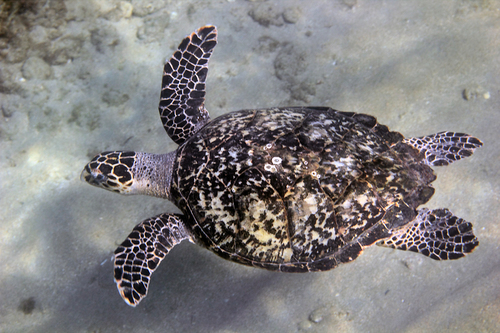
Hawksbill turtle
Seen Apr 2025
at Shark Airport (North Atoll)
Critically endangered
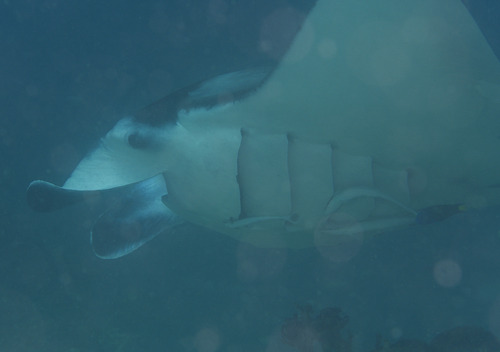
Manta ray
Seen May 2024
at Jessie Beazley Reef
Vulnerable
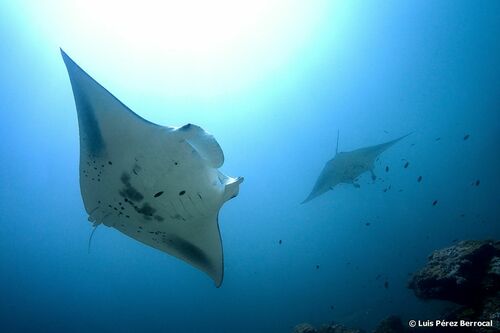
Reef Manta Ray
Seen May 2024
at North Atoll Wall
Vulnerable
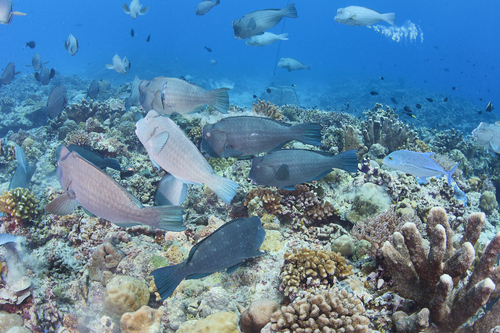
Bumphead parrotfish
Seen Apr 2024
at South Atoll
Vulnerable
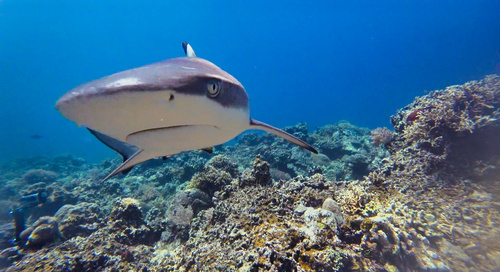
Blacktip reef shark
Seen year round
at Jessie Beazley Reef
Vulnerable
Schooling jacks
Seen year round
at Shark Airport (North Atoll)
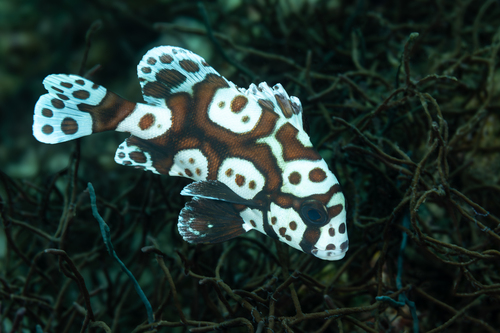
Sweetlips
Seen year round
at Coron Bay
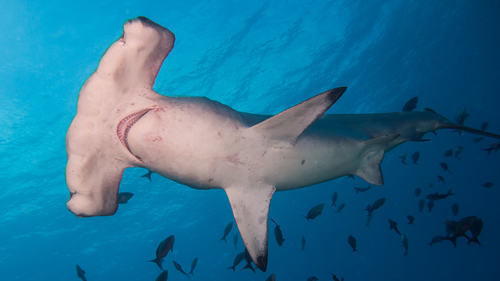
Scalloped hammerhead shark
Seasonal visitor
at North Atoll Wall
Critically endangered
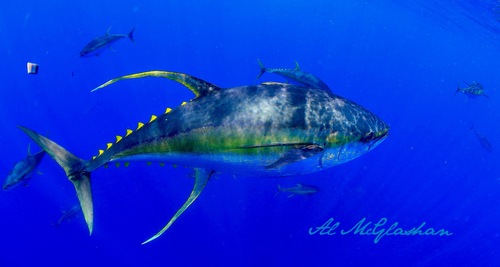
Yellowfin tuna
Seasonal visitor
at Jessie Beazley Reef
Least concern
Scalloped hammerhead
Rare sighting
at Jessie Beazley Reef
Critically endangered
Dive sites
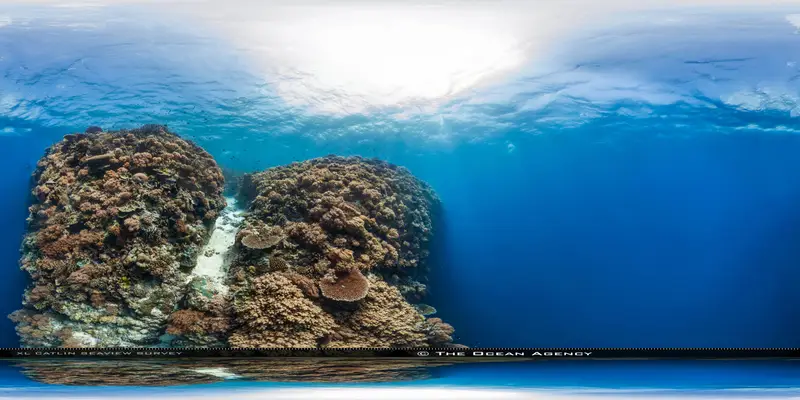
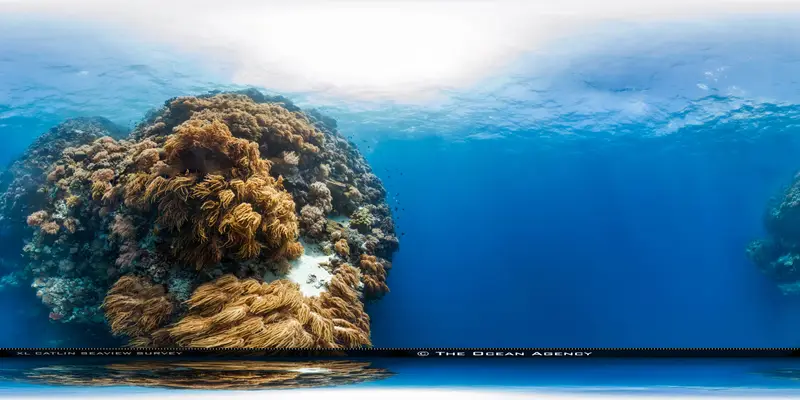
Shark Airport (North Atoll)
white-tip reef shark · grey reef shark · schooling jacks · hawksbill turtle
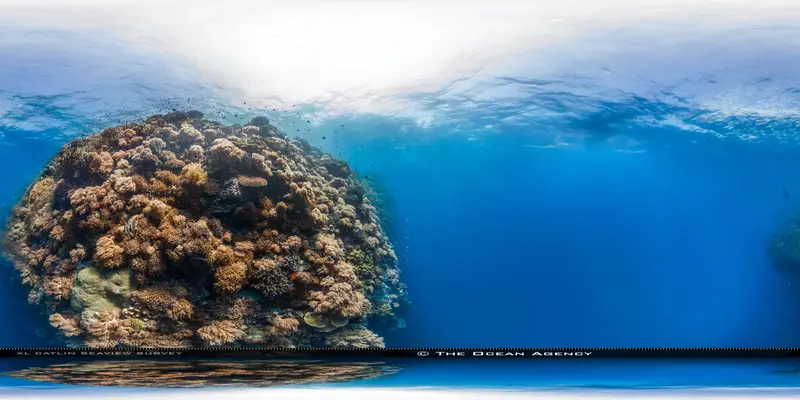
Coron Bay
green sea turtle · hawksbill sea turtle · lionfish · batfish
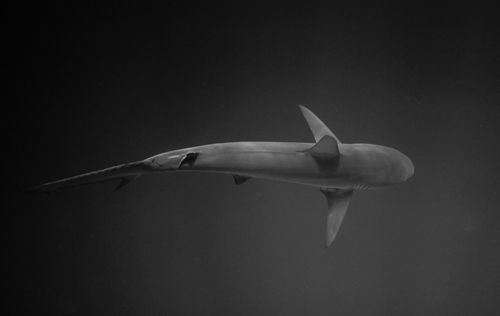
Jessie Beazley Reef
whitetip reef shark · grey reef shark · blacktip reef shark · schooling barracuda
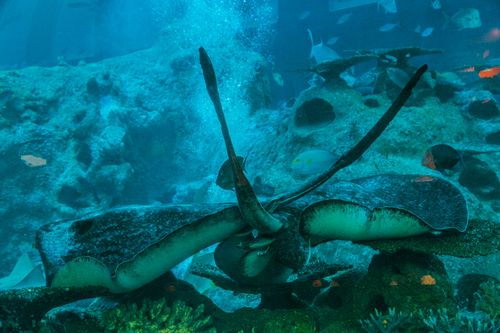
North Atoll Wall
scalloped hammerhead shark · dogtooth tuna · grey reef shark · bigeye trevally
South Atoll
reef manta ray · bumphead parrotfish · green sea turtle · whitetip reef shark
What divers say
The walls at Tubbataha are what every Caribbean wall wishes it was — twice as alive, half as touched.
We had a thresher cross under us at Shark Airport and the whole boat lost its mind at dinner. That's a normal day there.
Good to know
Park fee
~PHP 18,000 (~$320) conservation fee, usually added on top of the trip price.
Weather risk
The Sulu Sea crossing is the variable. A bad squall can cancel a day; build flexibility into return flights.