Invisible Bank
Havelock Island · India
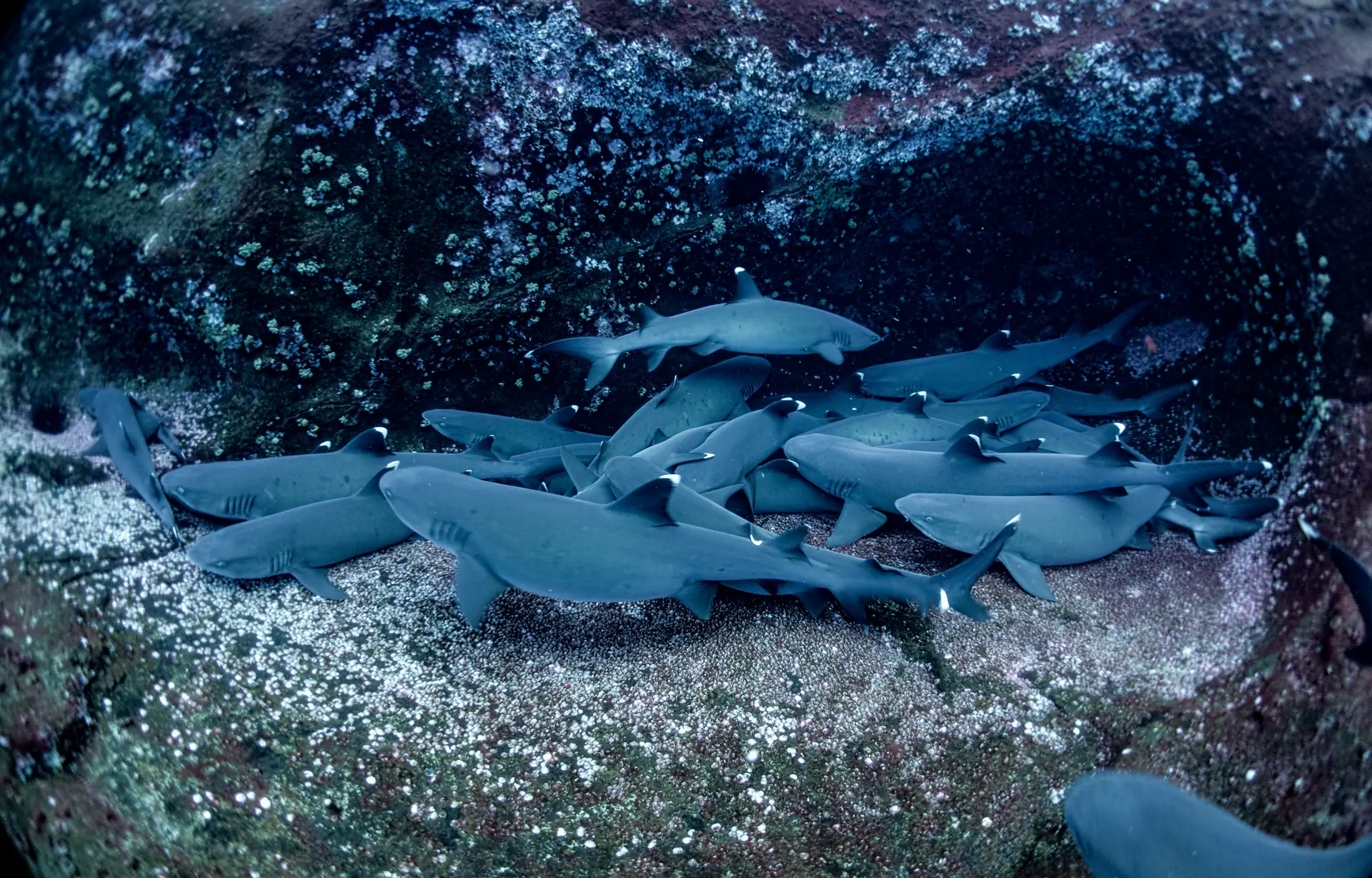
Submerged seamount about 100 km southeast of Havelock Island, where a flat rock crests within 8 m of the surface before its slopes drop past 30 m onto a sand and rubble base. Far from any sheltering land, the site is wholly exposed and the current can rip, but the trade off is pelagic density few Indian Ocean sites match. Dense schools of dogtooth tuna, bluefin and giant trevally, great barracuda, and unicornfish swirl over the rocks while grey reef sharks, whitetips, and resting nurse sharks patrol below. Bumphead parrotfish and napoleon wrasse work the structure, and scalloped hammerheads are sighted on lucky days in late winter. Visibility regularly hits 30 to 40 m. This is an advanced liveaboard dive that runs only when surface conditions cooperate.
Conditions
Depth
8 to 35 m
Advanced depths
Current
Often strong
Can pick up on the edge
Visibility
15 to 25 m
Clearest in the calm season
Water
26 to 30°C
Tropical 3mm wetsuit
Month by month
| Month | Jan | Feb | Mar | Apr | May | Jun | Jul | Aug | Sep | Oct | Nov | Dec |
|---|---|---|---|---|---|---|---|---|---|---|---|---|
| Water (°C) | 26 | 27 | 28 | 28 | 28 | 27 | 27 | 27 | 27 | 27 | 26 | 26 |
| Vis (m) | 25 | 30 | 30 | 25 | 15 | 8 | 5 | 5 | 8 | 15 | 20 | 25 |
| Current | Strong | Strong | Moderate | Moderate | Strong | Strong | Strong | Strong | Strong | Strong | Moderate | Moderate |
Your chances of seeing each animal
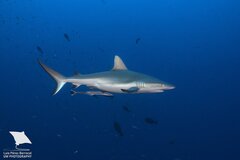
Grey reef shark
Last confirmed Apr 15, 2026 · 130 records
Almost always
Nearly every dive
Whitetip reef shark
Expected
Known here, not yet in recent logs
Tawny nurse shark
Expected
Known here, not yet in recent logs
Dogtooth tuna
Expected
Known here, not yet in recent logs
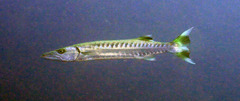
Great barracuda
Expected
Known here, not yet in recent logs
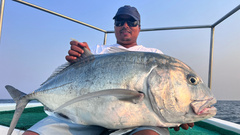
Giant trevally
Expected
Known here, not yet in recent logs
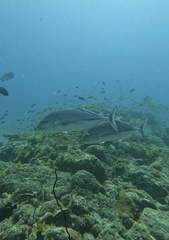
Bluefin trevally
Expected
Known here, not yet in recent logs
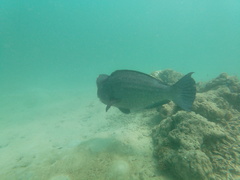
Bumphead parrotfish
Expected
Known here, not yet in recent logs
Gear
Basic kit
For this site
- Reef hook · Current can be unrelenting on the windward face; a reef hook keeps you parked where the pelagic action passes instead of fighting the flow.
- Long delayed surface marker buoy (closed circuit, 1.8 m or longer) · Pickups happen far offshore in chop. A tall closed circuit SMB with a finger spool is the difference between being seen and not.↗
- Nitrox cert with EAN32 fills · Bottom time at 25 to 30 m on air is too short to enjoy the pelagic carousel; EAN32 stretches no deco limits noticeably.