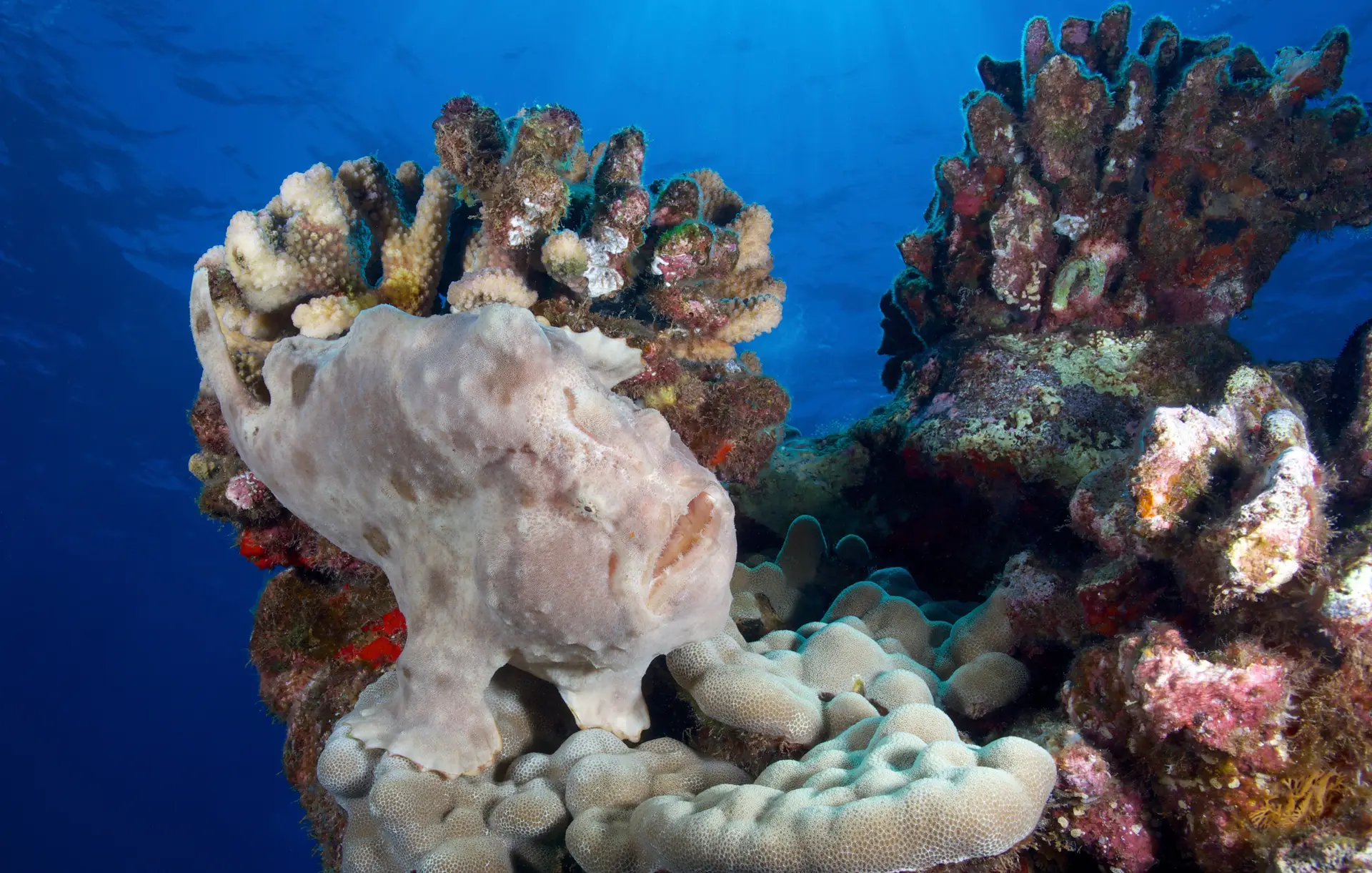
Superman's Flight
Anse Chastanet · Saint Lucia
Drift dive along the submerged western face of Petit Piton, the volcanic spire that drops straight from rainforest to abyss off Soufrière. The name comes from Superman II, which filmed the cliff above — divers fly the same line, just thirty metres lower. The slope is not a sheer wall but a steeply pitched garden of barrel sponges, gorgonians, and black coral, with the reef shelf starting near 18m and rolling off past 40m into open Caribbean water that touches 450m soundings within a kilometre. Current is typical but variable: some days you glide, other days you fly.
Conditions
Depth
12 to 40 m
Advanced depths
Current
Can be moderate
Can pick up on the edge
Visibility
15 to 25 m
Clearest in the calm season
Water
26 to 30°C
Rashguard or 3mm shorty
Month by month
| Month | Jan | Feb | Mar | Apr | May | Jun | Jul | Aug | Sep | Oct | Nov | Dec |
|---|---|---|---|---|---|---|---|---|---|---|---|---|
| Water (°C) | 26 | 26 | 26 | 27 | 28 | 28 | 28 | 29 | 29 | 28 | 27 | 26 |
| Vis (m) | 20 | 20 | 20 | 20 | 20 | 15 | 15 | 15 | 10 | 15 | 18 | 20 |
| Current | Moderate | Moderate | Gentle | Gentle | Gentle | Gentle | Gentle | Gentle | Moderate | Moderate | Moderate | Moderate |
Your chances of seeing each animal
Hawksbill turtle
Last confirmed May 15, 2026 · 130 records
Almost always
Nearly every dive
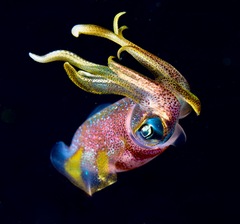
Caribbean reef squid
Last confirmed May 29, 2026 · 9 records
Very likely
Most dives
Spotted moray
Last confirmed Jun 9, 2026 · 10 records
Likely
About 6 in 10 dives
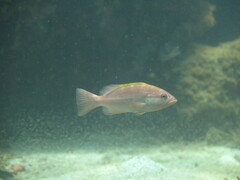
Yellowmouth grouper
Expected
Known here, not yet in recent logs
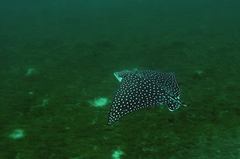
Eagle ray
Expected
Known here, not yet in recent logs
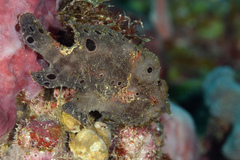
Frogfish
Expected
Known here, not yet in recent logs
Gear