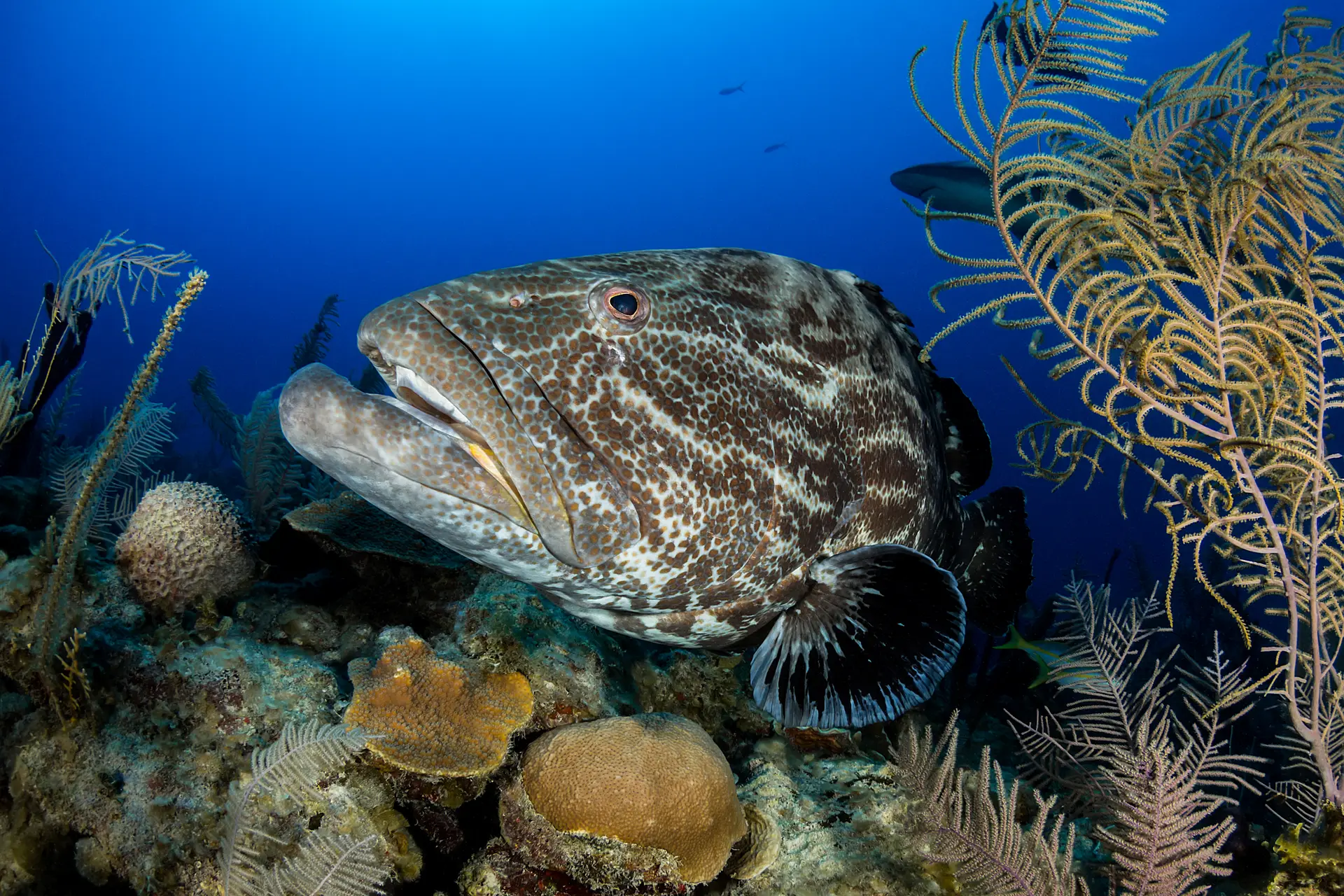
Pedra Vermelha
Arraial do Cabo · Brazil
A stepped boulder reef on the southwestern face of Ilha de Cabo Frio, named for the rust red iron staining on the rock. The structure drops from 2 to 18 meters in broken terraces, with crevices that shelter Brazilian morays, banded butterflyfish, and resident schools of yellow tail snapper. Green sea turtles graze the algae covered ledges in close enough range that wide angle shots work without a strobe. The South Atlantic upwelling pushes cold, plankton rich water onto the cape from late spring through summer, sometimes dropping temperatures into the high teens and visibility into single digits, but feeding dense fish life when conditions clear. Boat access only, 20 minutes from the Praia dos Anjos pier.
Conditions
Depth
2 to 18 m
Good for beginners
Current
Usually gentle
Can pick up on the edge
Visibility
8 to 18 m
Clearest in the calm season
Water
18 to 25°C
7mm wetsuit
Month by month
| Month | Jan | Feb | Mar | Apr | May | Jun | Jul | Aug | Sep | Oct | Nov | Dec |
|---|---|---|---|---|---|---|---|---|---|---|---|---|
| Water (°C) | 18 | 18 | 18 | 19 | 19 | 18 | 18 | 18 | 18 | 19 | 20 | 18 |
| Vis (m) | 8 | 8 | 10 | 12 | 12 | 10 | 10 | 10 | 8 | 8 | 6 | 6 |
| Current | Moderate | Moderate | Gentle | Gentle | Gentle | Gentle | Gentle | Gentle | Gentle | Gentle | Moderate | Moderate |
Your chances of seeing each animal
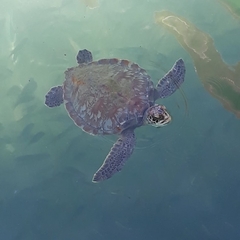
Green sea turtle
Last confirmed May 15, 2026 · 130 records
Almost always
Nearly every dive
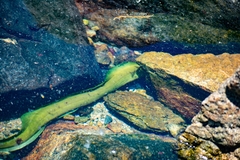
Brazilian moray
Last confirmed Feb 26, 2026 · 4 records
Likely
About 6 in 10 dives
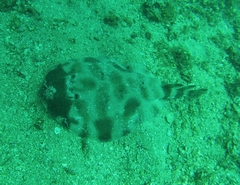
Electric ray
Last confirmed Apr 25, 2026 · 6 records
Likely
About 6 in 10 dives
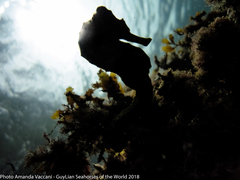
Longsnout seahorse
Last confirmed Jun 7, 2026 · 1 records
Sometimes
About 1 in 3 dives
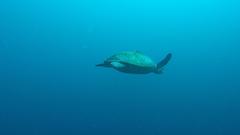
Hawksbill turtle
Last confirmed May 7, 2026 · 7 records
Sometimes
About 1 in 3 dives
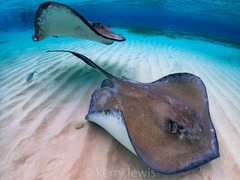
Southern stingray
Expected
Known here, not yet in recent logs
Yellow goatfish and parrotfish schools
Expected
Known here, not yet in recent logs
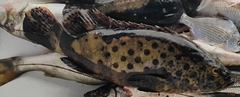
Atlantic goliath grouper
Expected
Known here, not yet in recent logs
Gear