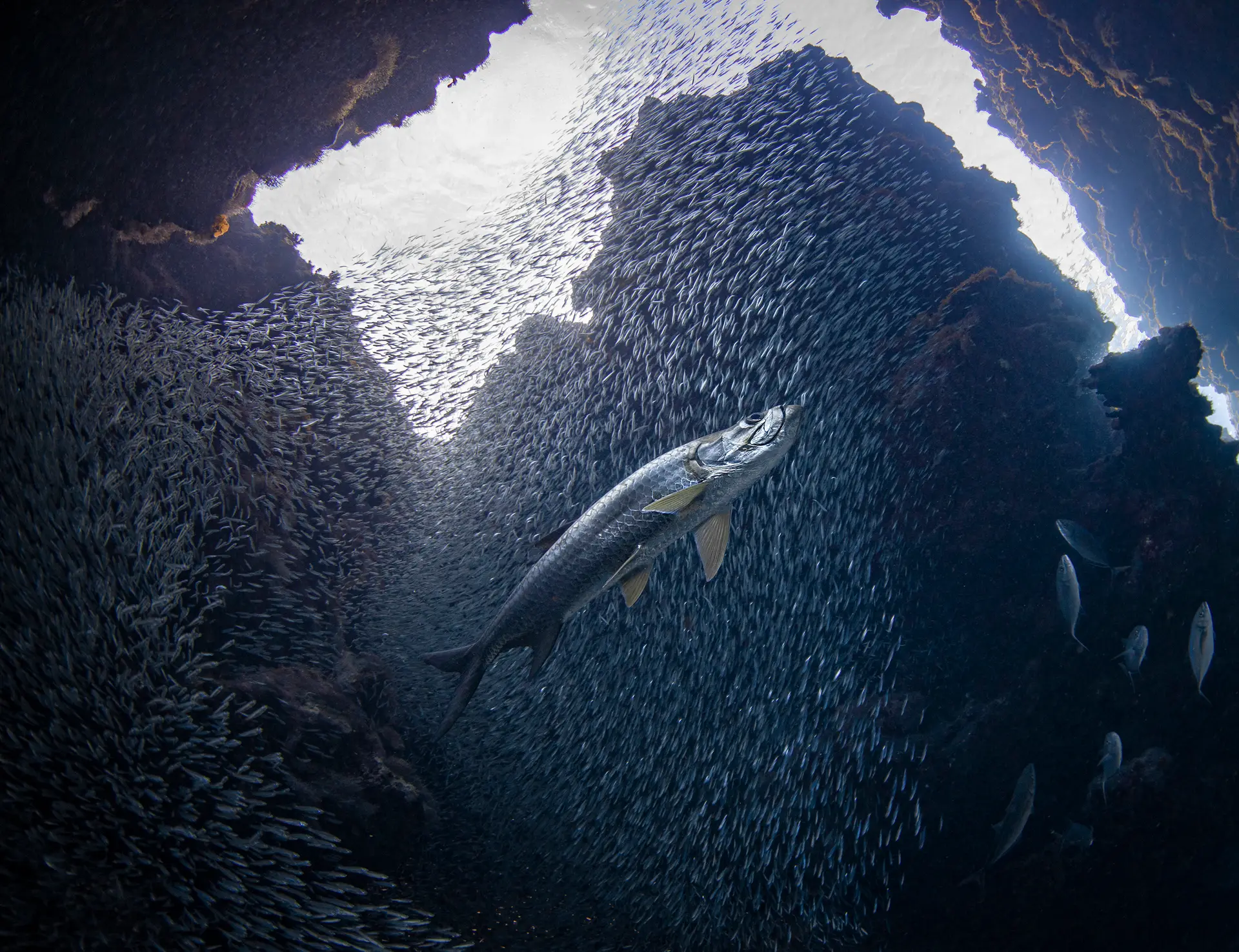
Hilma Hooker Wreck
Bonaire National Marine Park · Bonaire
72 m cargo freighter scuttled in 1984 after a drug smuggling bust, lying on its starboard side between two reefs at 30 m. The mast reaches up to 18 m and the wheelhouse offers safe penetration for trained divers. Shore-accessible from the salt flats road.
Conditions
Depth
18 to 30 m
Open water and up
Current
Usually still
Can pick up on the edge
Visibility
15 to 30 m
Clearest in the calm season
Water
25 to 29°C
Tropical wetsuit
Month by month
| Month | Jan | Feb | Mar | Apr | May | Jun | Jul | Aug | Sep | Oct | Nov | Dec |
|---|---|---|---|---|---|---|---|---|---|---|---|---|
| Water (°C) | 25 | 25 | 26 | 26 | 27 | 28 | 28 | 28 | 28 | 27 | 26 | 25 |
| Vis (m) | 20 | 20 | 25 | 25 | 25 | 20 | 20 | 20 | 15 | 15 | 20 | 20 |
| Current | Still | Still | Still | Still | Still | Still | Still | Still | Still | Still | Still | Still |
Your chances of seeing each animal
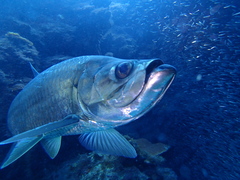
Tarpon
Last confirmed May 15, 2026 · 130 records
Almost always
Nearly every dive
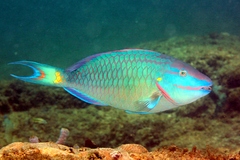
Stoplight Parrotfish
Last confirmed May 30, 2026 · 199 records
Almost always
Nearly every dive
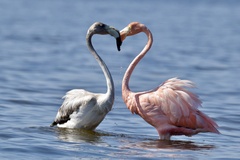
American Flamingo
Last confirmed Jul 1, 2026 · 206 records
Almost always
Nearly every dive
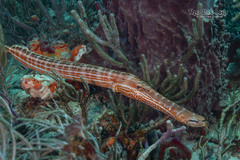
Western Atlantic Trumpetfish
Last confirmed May 22, 2026 · 146 records
Almost always
Nearly every dive
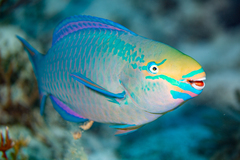
Queen Parrotfish
Last confirmed May 21, 2026 · 150 records
Almost always
Nearly every dive
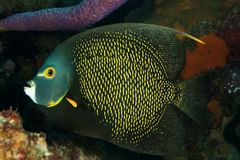
French Angelfish
Last confirmed Jun 23, 2026 · 115 records
Almost always
Nearly every dive
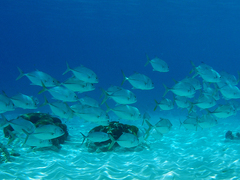
Schooling horse-eye jack
Last confirmed May 20, 2026 · 26 records
Very likely
Most dives
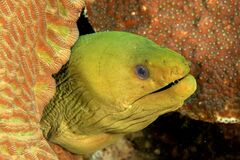
Green moray eel
Last confirmed Jul 4, 2026 · 25 records
Very likely
Most dives
Gear