Sunflower Sea Star
Pycnopodia helianthoides
Sighting evidence at Dodd Narrows, British Columbia
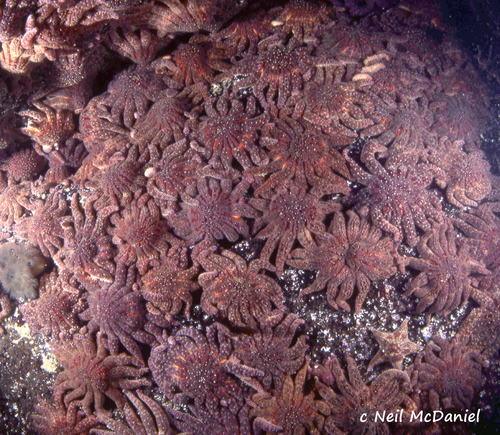
Photo: Neil McDaniel · CC BY-NC
The sunflower sea star — the world's largest sea star and one of the fastest-moving — was once abundant at Dodd Narrows before the catastrophic sea star wasting disease of 2013 to 2015 eliminated over 90% of populations across the Pacific Coast. Small numbers of recovering individuals have been documented at this site in recent years, making each sighting scientifically significant. Their recovery is critical to kelp forest health, as they are the primary predator controlling sea urchin populations that would otherwise overgraze the kelp.
Evidence at this site
12 records within 25 km
Confidence: medium
Seasonality
Jan
Feb
Mar
Apr
May
Jun
Jul
Aug
Sep
Oct
Nov
Dec