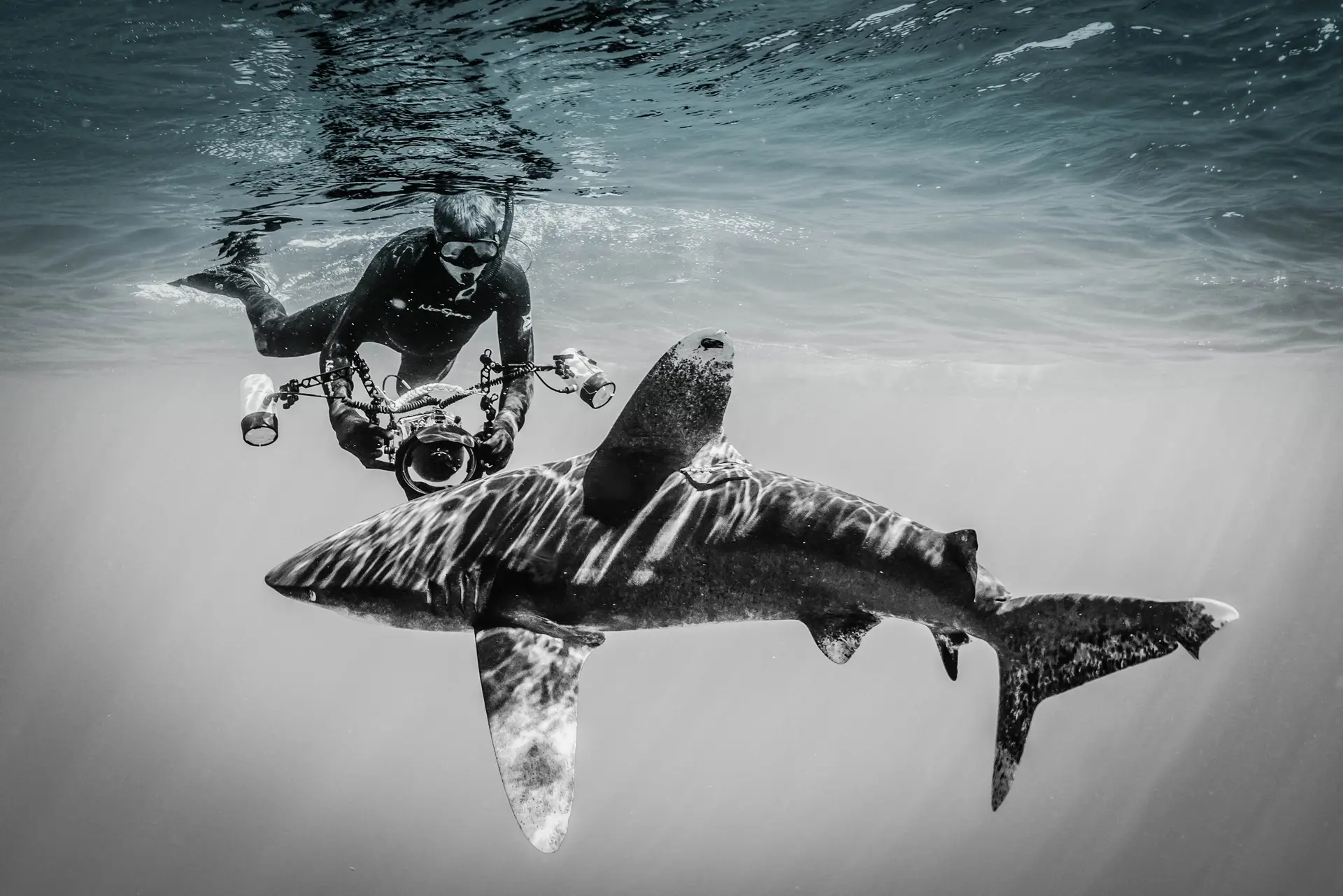
La Pared (The Wall)
Catalina Islands · Costa Rica
A volcanic rock face on the outer Catalina Islands off Guanacaste, dropping from about 12 metres to past 24 along a single sloping wall locals call Shark Alley. Cold nutrient rich upwellings between November and April pull oceanic manta rays with wingspans over 6 metres, mobula schools of dozens to hundreds, and squadrons of cow nosed and spotted eagle rays through the cleaning stations on the ridge. White-tip reef sharks rest in the channels at the base, with schooling jacks, snapper and the occasional bull or whitetip in the blue. Strong tidal currents and a sharp thermocline make for serious diving, but it is the most reliable Pacific manta encounter in northern Costa Rica.
Conditions
Depth
12 to 24 m
Open water and up
Current
Can be moderate
Can pick up on the edge
Visibility
8 to 18 m
Clearest in the calm season
Water
17 to 30°C
3mm full
Month by month
| Month | Jan | Feb | Mar | Apr | May | Jun | Jul | Aug | Sep | Oct | Nov | Dec |
|---|---|---|---|---|---|---|---|---|---|---|---|---|
| Water (°C) | 18 | 17 | 18 | 22 | 25 | 26 | 27 | 27 | 27 | 26 | 24 | 20 |
| Vis (m) | 10 | 10 | 15 | 15 | 10 | 8 | 8 | 8 | 8 | 8 | 12 | 12 |
| Current | Strong | Strong | Strong | Moderate | Moderate | Moderate | Moderate | Moderate | Moderate | Moderate | Moderate | Strong |
Your chances of seeing each animal
King angelfish
Last confirmed Feb 27, 2026 · 42 records
Almost always
Nearly every dive
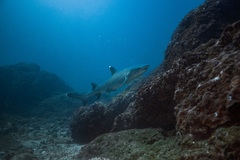
Whitetip reef shark
Last confirmed Feb 16, 2026 · 23 records
Very likely
Most dives
Spotted eagle ray
Last confirmed Jan 20, 2026 · 10 records
Very likely
Most dives
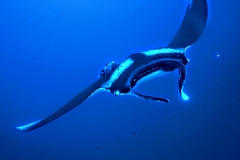
Oceanic manta ray
Last confirmed Apr 15, 2026 · 45 records
Likely
About 6 in 10 dives
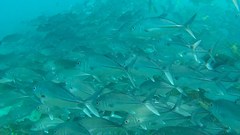
Bigeye jack
Last confirmed Jul 5, 2025 · 4 records
Likely
About 6 in 10 dives
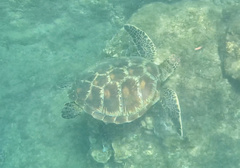
Pacific green turtle
Last confirmed Apr 8, 2026 · 9 records
Likely
About 6 in 10 dives
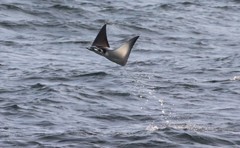
Munk's devil ray
Last confirmed Mar 4, 2024 · 6 records
Sometimes
About 1 in 3 dives
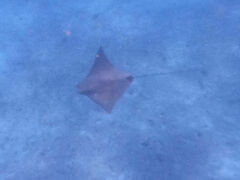
Cow-nosed ray
Expected
Known here, not yet in recent logs
Gear
Basic kit
For this site
- Temperate wetsuit · Upwellings in manta season push water below 20°C with sharp thermoclines — a 5mm full suit plus hood is standard from December through March.
- SMB + reel · Drift profiles along the wall regularly end in blue-water ascents; surface marker buoy is required for boat pickup in current.