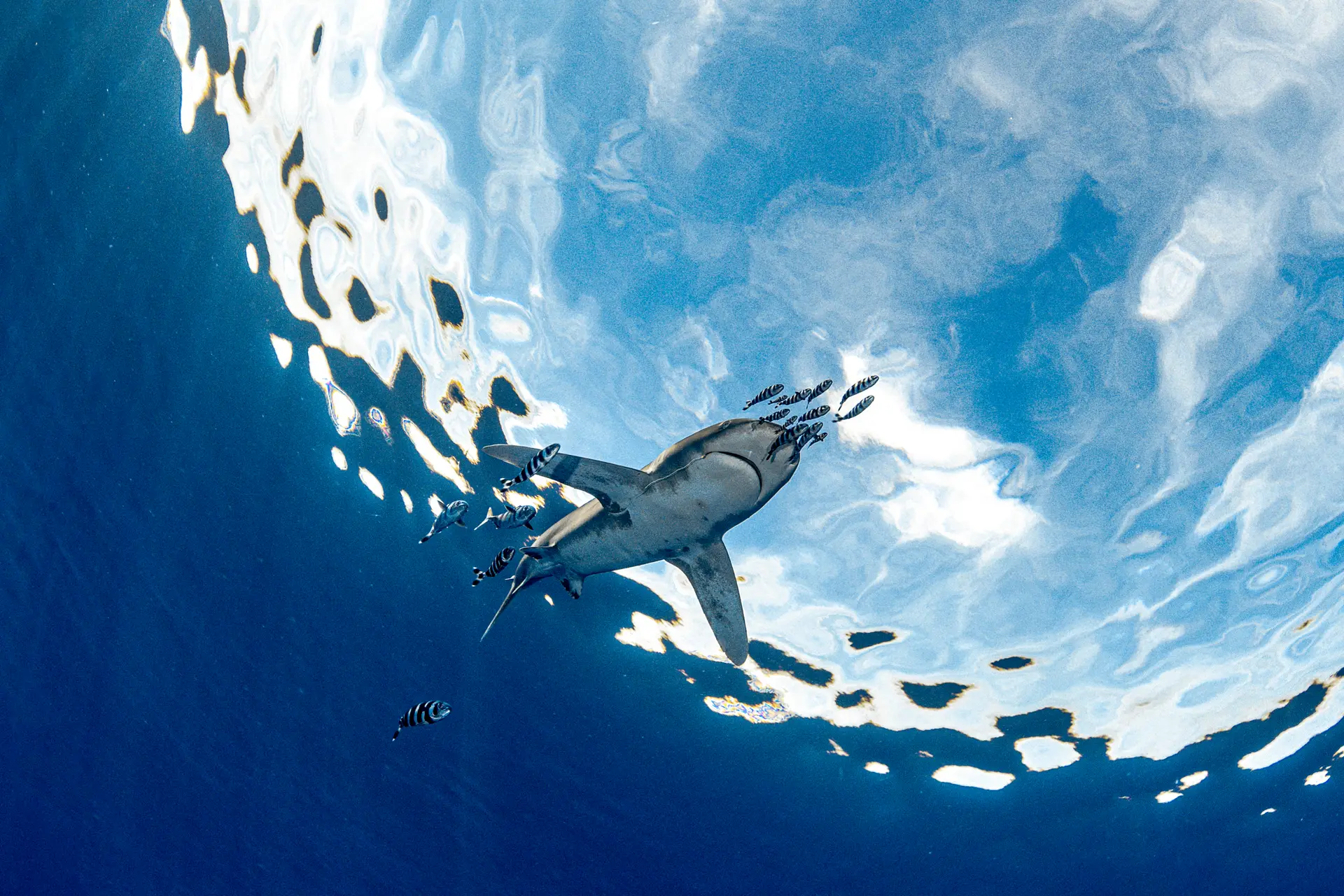
Daedalus Reef
Brothers Islands · Egypt
Isolated 400 × 100 m oval reef in the central Red Sea, 90 km east of Marsa Alam, marked by a black and white striped lighthouse rebuilt in 1931. Walls drop from the surface to 20 m then slope to 40 m before plunging into 550 m of open water. The north tip is the money dive — a current swept point where scalloped hammerhead schools queue in summer and oceanic threshers cruise the blue. The south plateau holds 'Anemone City', a 15 m carpet of magnificent anemones and clownfish. Liveaboard-only.
Conditions
Depth
5 to 40 m
Advanced depths
Current
Can be moderate
Can pick up on the edge
Visibility
25 to 40 m
Clearest in the calm season
Water
21 to 30°C
Tropical wetsuit
Month by month
| Month | Jan | Feb | Mar | Apr | May | Jun | Jul | Aug | Sep | Oct | Nov | Dec |
|---|---|---|---|---|---|---|---|---|---|---|---|---|
| Water (°C) | 22 | 21 | 22 | 23 | 25 | 27 | 28 | 28 | 27 | 26 | 24 | 23 |
| Vis (m) | 25 | 25 | 25 | 25 | 25 | 30 | 30 | 30 | 30 | 25 | 25 | 25 |
| Current | Moderate | Moderate | Moderate | Moderate | Moderate | Strong | Strong | Strong | Strong | Moderate | Moderate | Moderate |
Your chances of seeing each animal
Scalloped hammerhead
Last confirmed Sep 15, 2025 · 45 records
Very likely
Most dives
Humphead wrasse
Last confirmed Apr 9, 2026 · 16 records
Likely
About 6 in 10 dives
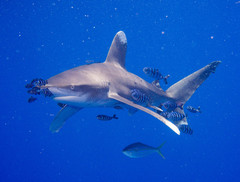
Oceanic whitetip shark
Last confirmed Aug 16, 2025 · 12 records
Likely
About 6 in 10 dives
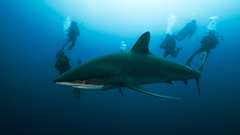
Silky shark
Last confirmed Apr 9, 2026 · 12 records
Sometimes
About 1 in 3 dives

Grey reef shark
Expected
Known here, not yet in recent logs

Magnificent anemone & anemonefish
Expected
Known here, not yet in recent logs
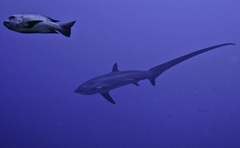
Pelagic thresher shark
Expected
Known here, not yet in recent logs
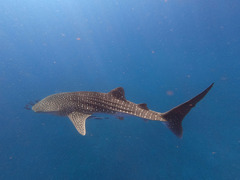
Whale shark
Expected
Known here, not yet in recent logs
Gear
Basic kit
For this site
- SMB + long reel · Dives end as blue-water drifts away from the reef; every diver shoots their own marker for the zodiac pickup.↗
- Nitrox certification · Hammerhead encounters happen at 25–40 m on the north tip — EAN32 buys meaningful bottom time across 3–4 dives a day.
- Dive light · Strong sun on shallow walls but the swim-throughs on the south plateau and the wall slopes past 30 m hold shaded crevices worth peering into.↗