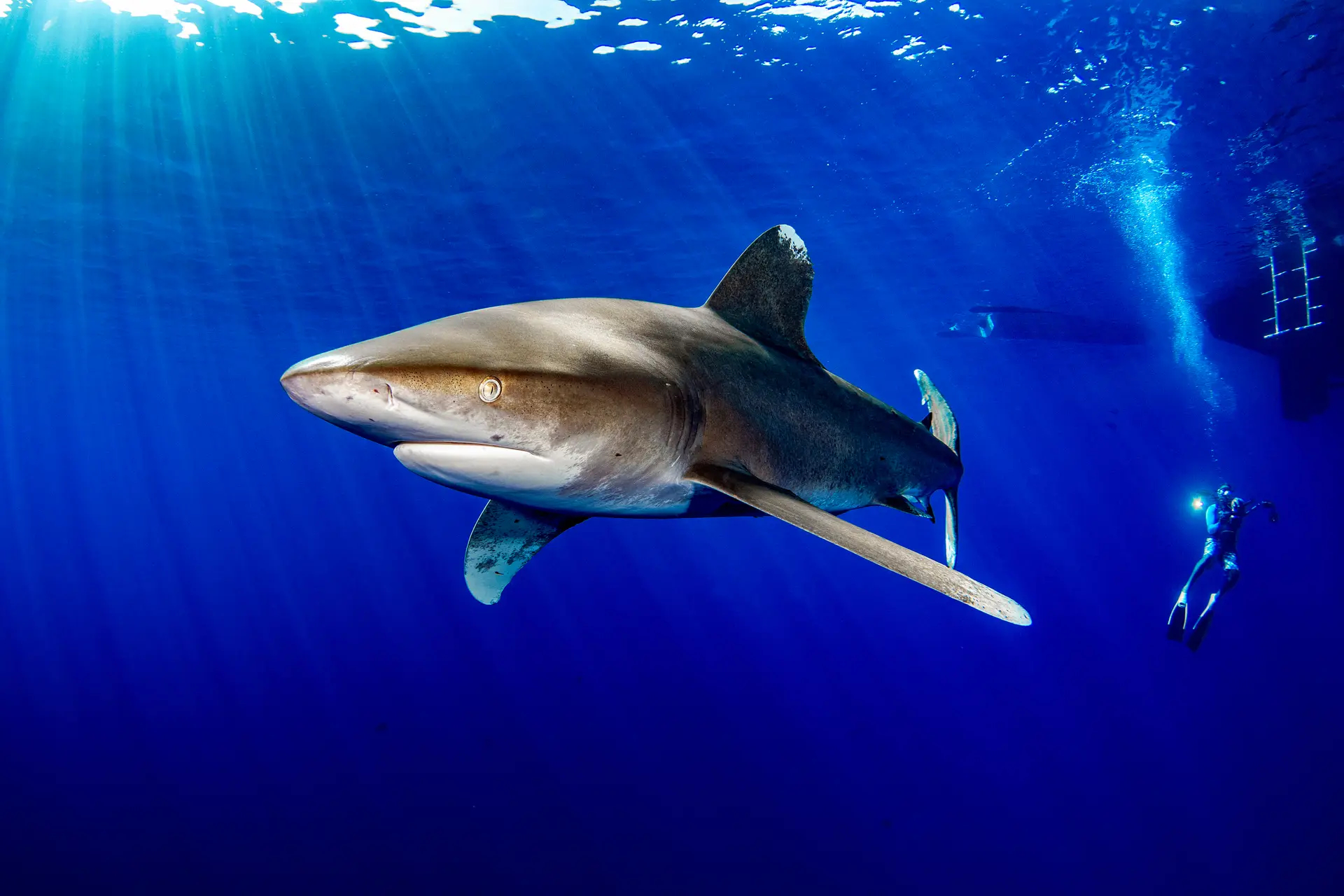
Little Brother
Brothers Islands · Egypt
The smaller of the two El Ikhwa pinnacles, one kilometre south of Big Brother and barely 170 metres long. Sheer walls plunge past recreational limits into the blue; the north plateau bottoms out around 40 m and is the staging point for thresher and hammerhead encounters. Soft-coral overhangs on the south and west walls bloom in the current, with grey reef sharks patrolling the corners and oceanic whitetips circling the surface in autumn. Liveaboard-only, current dependent, and routinely dived as a drift along one wall before a blue water hang.
Conditions
Depth
5 to 40 m
Advanced depths
Current
Can be moderate
Can pick up on the edge
Visibility
25 to 35 m
Clearest in the calm season
Water
21 to 30°C
Tropical wetsuit
Month by month
| Month | Jan | Feb | Mar | Apr | May | Jun | Jul | Aug | Sep | Oct | Nov | Dec |
|---|---|---|---|---|---|---|---|---|---|---|---|---|
| Water (°C) | 22 | 21 | 22 | 24 | 25 | 27 | 28 | 28 | 27 | 26 | 24 | 23 |
| Vis (m) | 20 | 20 | 25 | 25 | 25 | 25 | 25 | 25 | 25 | 25 | 25 | 20 |
| Current | Moderate | Moderate | Moderate | Moderate | Moderate | Strong | Strong | Strong | Strong | Moderate | Moderate | Moderate |
Your chances of seeing each animal
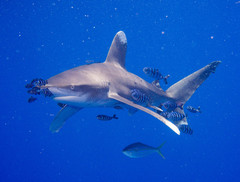
Oceanic whitetip shark
Last confirmed Dec 15, 2025 · 45 records
Very likely
Most dives
Thresher shark
Last confirmed Dec 28, 2024 · 1 records
Sometimes
About 1 in 3 dives
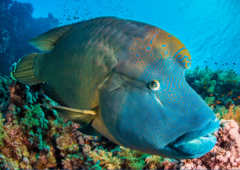
Napoleon wrasse
Last confirmed Oct 15, 2024 · 3 records
Sometimes
About 1 in 3 dives

Grey reef shark
Expected
Known here, not yet in recent logs
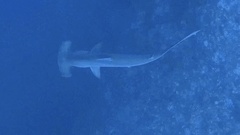
Scalloped hammerhead
Expected
Known here, not yet in recent logs
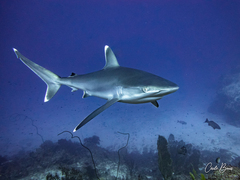
Silvertip shark
Expected
Known here, not yet in recent logs
Gear
Basic kit
For this site
- SMB + long reel · Drift exits in open ocean — operators require a long-line SMB for blue-water pickup.↗
- Reef hook · Strong current on the corners; hooking in lets you hold the plateau edge to watch sharks without finning.