Planning a trip?
Hotels, dive operators, gear, and how to get here are on the Ras Mohammed location page.
Overview
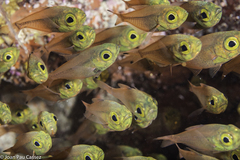
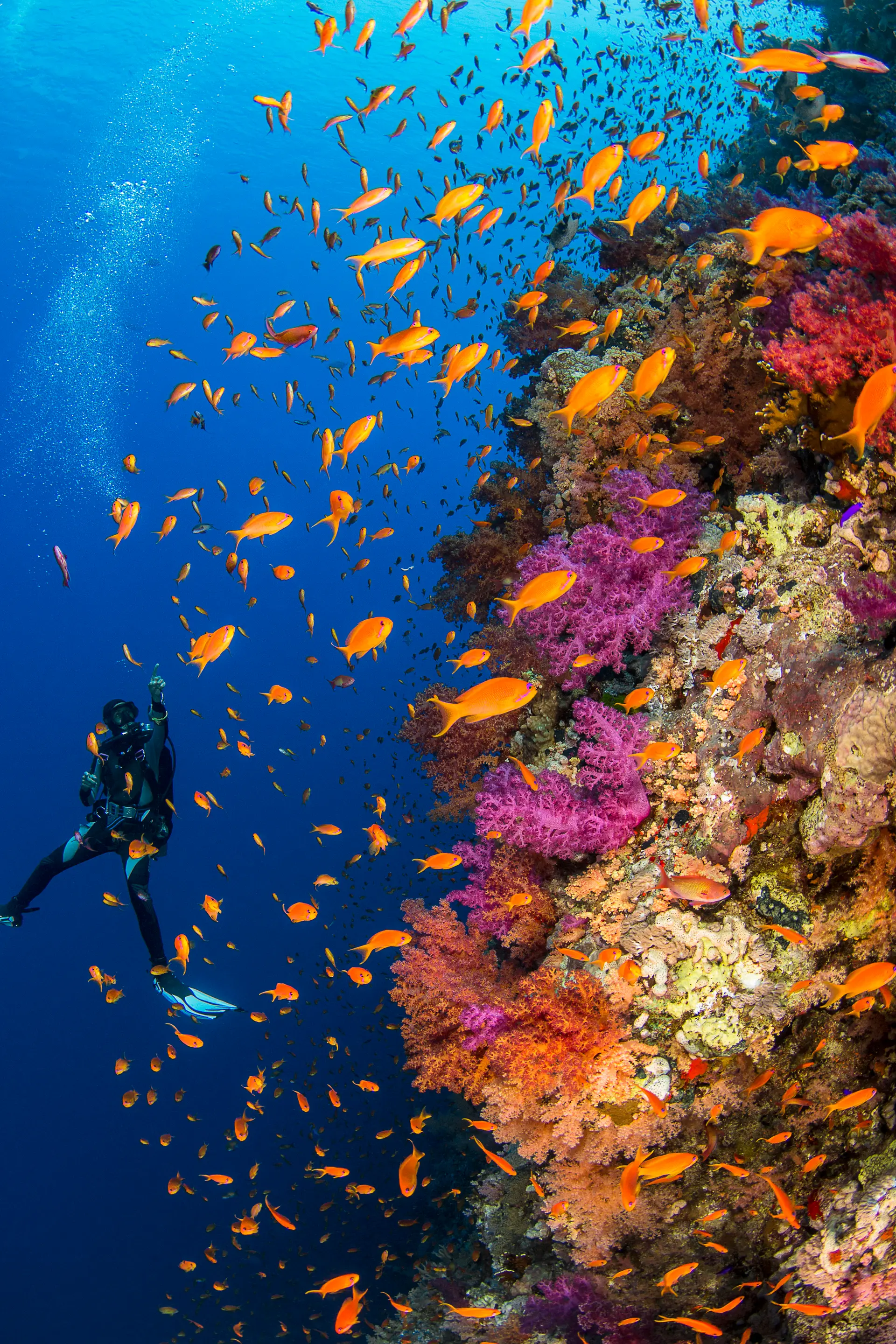
British P&O steam-and-sail hybrid that struck Sha'ab Abu Nuhas reef on the night of 12-13 September 1869, broke in two after thirty-six hours of pounding seas, and sank with thirty-one of those aboard plus £40,000 in Indian Mint coins and a hold of fine wines and Royal Mail. Rediscovered in May 1984, the 89-meter iron hull now lies on its port side parallel to the reef between 16 and 27 m, the wooden superstructure long since rotted into a skeletal lattice of iron crossbeams that lets sunlight stream through the stacked decks. Soft coral and gorgonians fur the wreck head to stern; glassfish boil through the broken midships and shoals of bluestripe snapper hover off the bow. The hold still rewards careful searchers with the dark-green Hamilton-pattern wine bottles that earned the wreck its nickname, the 'Bottle Wreck.'
Briefing note
Advanced Open Water with some wreck experience strongly recommended. The collapsed wooden upper decks have left the iron-rib skeleton wide open, so most swim-throughs are well-lit and free of true overhead — making the Carnatic the most beginner-friendly of the four Abu Nuhas wrecks. Three mooring buoys serve different wrecks on the reef; confirm with the guide which wreck the line drops on, as currents can prevent moving between them. Strait of Gubal winds frequently force itineraries to swap Abu Nuhas for sheltered sites. Removing artefacts (including the famous wine bottles) is prohibited under Egyptian antiquities law. Nearest hyperbaric chamber is in Hurghada.
What you'll see
7 species curated- year-roundGlassfish (sweeper)Peak: Jan · Feb · Mar · Apr · May · Jun · Jul · Aug · Sep · Oct · Nov · Dec
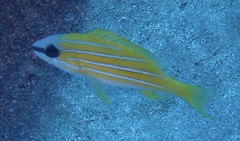
- year-roundBluestripe snapperPeak: Jan · Feb · Mar · Apr · May · Jun · Jul · Aug · Sep · Oct · Nov · Dec
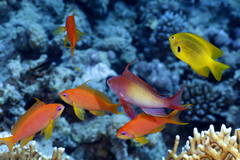
- year-roundScalefin anthiasPeak: Jan · Feb · Mar · Apr · May · Jun · Jul · Aug · Sep · Oct · Nov · Dec
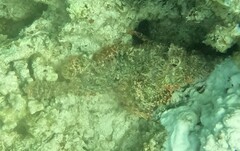
- year-roundScorpionfishPeak: Jan · Feb · Mar · Apr · May · Jun · Jul · Aug · Sep · Oct · Nov · Dec
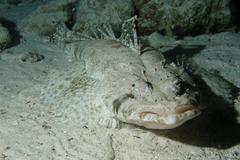
- year-roundCrocodilefishPeak: Jan · Feb · Mar · Apr · May · Jun · Jul · Aug · Sep · Oct · Nov · Dec
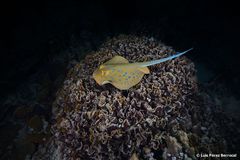
- year-roundBluespotted stingrayPeak: Jan · Feb · Mar · Apr · May · Jun · Jul · Aug · Sep · Oct · Nov · Dec
- year-roundGiant morayPeak: Jan · Feb · Mar · Apr · May · Jun · Jul · Aug · Sep · Oct · Nov · Dec
Sightings evidence
1 record on file- high confidenceGlassfish (sweeper)
- Last confirmed
- May 2026
- Recent records
- 130 within 10 km
- Cluster months
- Year-round
Sources & methodology
How we summarise this
We aggregate confirmed occurrence records from GBIF and OBIS within a fixed radius of each dive site. Occurrence records confirm presence and reveal seasonality clustering, but they DO NOT measure per-dive probability — there is no eligible-effort denominator. We deliberately do not publish a numeric '% chance of sighting' from this data.
Sources
- Global Biodiversity Information Facility — GBIF Secretariat
- Ocean Biodiversity Information System — IOC-UNESCO
- OBIS-SEAMAP — Duke University Marine Geospatial Ecology Lab / OBIS
- iNaturalist — California Academy of Sciences & National Geographic Society
- IUCN Red List of Threatened Species — International Union for Conservation of Nature
- WoRMS — World Register of Marine Species — Flanders Marine Institute (VLIZ)
- FishBase — FishBase Consortium
- Atlas of Living Australia — CSIRO / GBIF Australia
- REEF Volunteer Fish Survey — Reef Environmental Education Foundation
The wreck
Ship history- Underwater cultural heritage
Freighter · United Kingdom
SS Carnatic
- Built
- 1862
- Sunk
- Sep 13, 1869
- Length
- 90 m
- Tonnage
- 1,776
- Diveable depth
- 16–27 m
- How she sank
- Accident
P&O steamer that struck Sha'ab Abu Nuhas reef en route to Bombay and broke up after 36 hours, taking 31 lives and a cargo of gold sovereigns to the bottom. The oldest divable wreck on the Egyptian Red Sea.
Notable features
- intact hull skeleton
- wine bottles
- porthole frames
- swim-throughs
Vessel histories sourced from the Naval History and Heritage Command (DANFS), NOAA ENC Direct, and editorial research. Bathymetry per GEBCO. See the methodology for limits.
Conditions
| Month | Water | Visibility | Current |
|---|---|---|---|
| Jan | 21–23 °C | 20–30 m | moderate |
| Feb | 20–22 °C | 20–30 m | moderate |
| Mar | 21–23 °C | 20–30 m | moderate |
| Apr | 22–24 °C | 20–30 m | moderate |
| May | 24–26 °C | 20–30 m | moderate |
| Jun | 26–28 °C | 20–30 m | moderate |
| Jul | 27–29 °C | 20–30 m | moderate |
| Aug | 28–30 °C | 20–30 m | moderate |
| Sep | 27–29 °C | 20–30 m | moderate |
| Oct | 26–28 °C | 20–30 m | moderate |
| Nov | 24–26 °C | 20–30 m | moderate |
| Dec | 22–24 °C | 20–30 m | moderate |
Season calendar
Peak season highlighted · current month outlined
Gear for this site
Beyond the basic kit- Primary plus backup torch — Light beams through the rotted upper decks are the wreck's signature look, but the holds and the dark debris field between bow and stern reveal lobsters, morays and the wine-bottle shards only with a torch.
- SMB — Currents on Abu Nuhas build through the morning and the mooring line is often unreachable on ascent; an SMB is mandatory for free-water ascents off the wreck.
Next step
Book your trip to Ras Mohammed
Hotels, liveaboards, dive operators, gear recommendations, and travel logistics for the whole region.
Plan your trip →Some links earn us a commission. Learn more