Common Sea Star
Asterias rubens
Sighting evidence at Gjógv Sea Cave, Faroe Islands
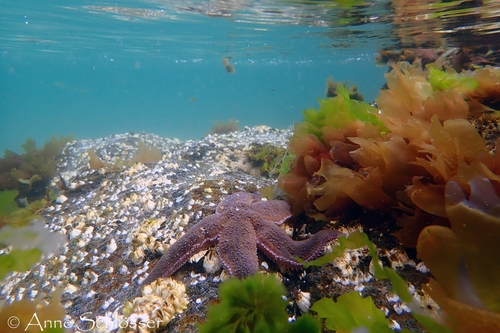
Photo: Anne Schlösser · CC BY-NC
Common sea stars aggregate in large numbers across the cave floor and lower walls at Gjógv, feeding on the dense beds of blue mussels and barnacles that grow wherever there is sufficient light near the entrance. In cold, productive North Atlantic water they grow to exceptional size, with individuals spanning 50 centimetres across not uncommon in protected cave environments. During seasonal mass spawning events, the water inside the cave becomes milky with gametes — a dramatic chemical signal that triggers synchronised reproduction across dozens of individuals within minutes.
Evidence at this site
3 records within 25 km
Confidence: low
Seasonality
Jan
Feb
Mar
Apr
May
Jun
Jul
Aug
Sep
Oct
Nov
Dec