Benwood Wreck
Florida Keys · United States
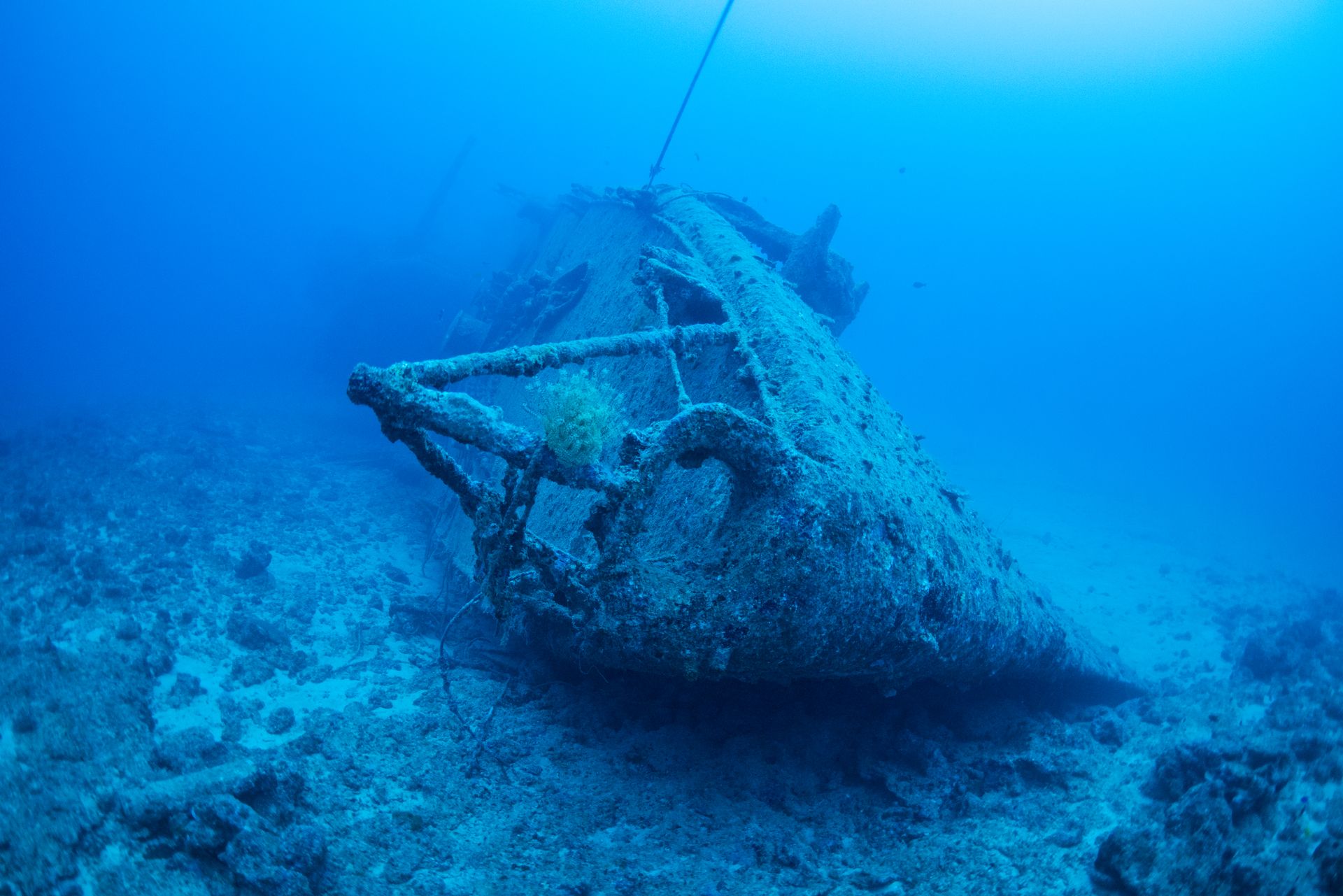
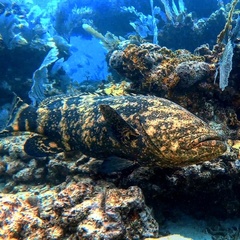
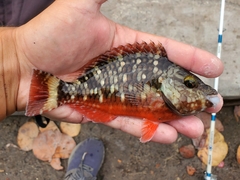
A 110 m English steam freighter that collided with the SS Robert C. Tuttle off Key Largo on 9 April 1942 while running blacked out to evade a German submarine. She settled on a sandy slope between Dixie Shoals and French Reef, the broken midships and stern in 8 m of sand and the crushed bow rising 8 m above the bottom at 14 m. One of the most dived wrecks in the world and a staple shallow night dive: schools of porkfish and grunts shelter inside the forward hull, queen angelfish and stoplight parrotfish work plates encrusted with elkhorn coral and sea fans, and resident green morays and goliath grouper sit in the wreckage. Salvage in the 1950s and postwar gunnery practice broke the hull apart, but the bow profile and ribs remain the canonical photo subjects.
Conditions
Depth
8 to 14 m
Good for beginners
Current
Usually gentle
Can pick up on the edge
Visibility
15 to 25 m
Clearest in the calm season
Water
22 to 31°C
3mm wetsuit
Month by month
| Month | Jan | Feb | Mar | Apr | May | Jun | Jul | Aug | Sep | Oct | Nov | Dec |
|---|---|---|---|---|---|---|---|---|---|---|---|---|
| Water (°C) | 22 | 22 | 23 | 24 | 26 | 28 | 29 | 29 | 28 | 26 | 24 | 22 |
| Vis (m) | 12 | 12 | 15 | 20 | 20 | 20 | 20 | 20 | 15 | 15 | 12 | 12 |
| Current | Gentle | Gentle | Gentle | Gentle | Gentle | Gentle | Gentle | Gentle | Moderate | Gentle | Gentle | Gentle |
Your chances of seeing each animal
Goliath grouper
Last confirmed May 15, 2026 · 130 records
Almost always
Nearly every dive
Stoplight parrotfish
Last confirmed Jul 4, 2026 · 225 records
Almost always
Nearly every dive
Great barracuda
Last confirmed Jul 4, 2026 · 208 records
Almost always
Nearly every dive
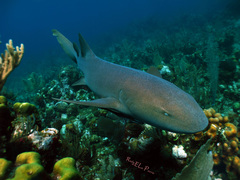
Nurse shark
Last confirmed May 23, 2026 · 89 records
Almost always
Nearly every dive
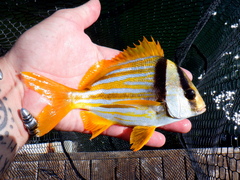
Porkfish
Last confirmed Jun 29, 2026 · 54 records
Almost always
Nearly every dive
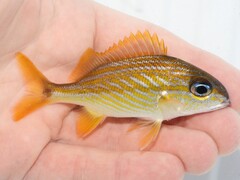
French grunt
Last confirmed Jul 8, 2026 · 50 records
Almost always
Nearly every dive
Spiny lobster
Last confirmed Jul 4, 2026 · 44 records
Almost always
Nearly every dive
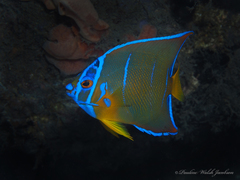
Queen angelfish
Last confirmed Jun 15, 2026 · 36 records
Very likely
Most dives
Gear
Basic kit
For this site
- Underwater torch · Goliath grouper and green morays hold in shaded pockets inside the bow and under broken plates; a torch reveals the wreck's resident fauna and is mandatory for the popular night dive.
- SMB and reel · Multiple charter boats work the three mooring buoys simultaneously and Gulf Stream eddies can push divers off the wreck; deploy a marker before surfacing.