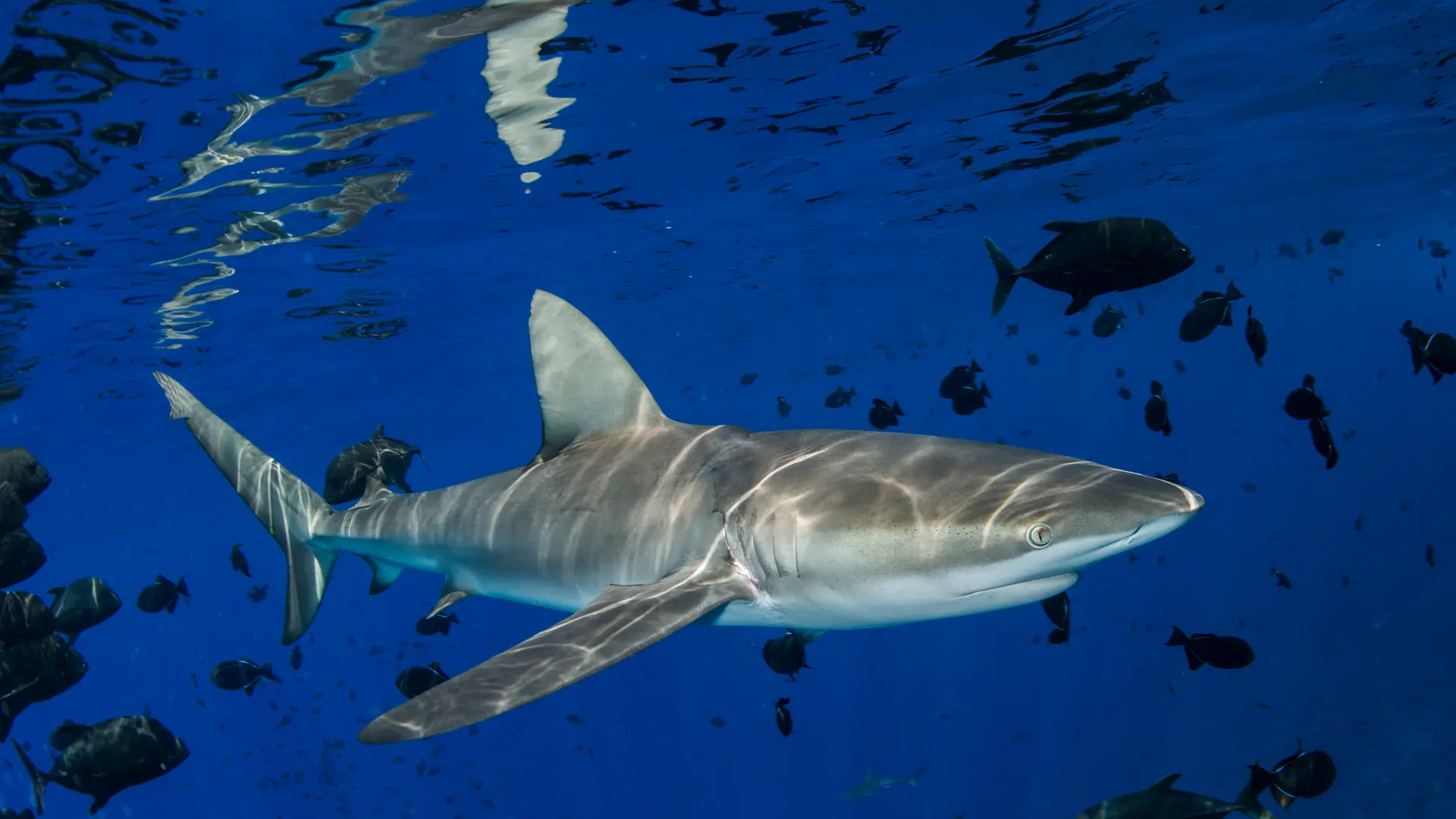
Darwin's Arch (The Pillars)
Darwin Island · Ecuador
Liveaboard-only seamount off the remote Darwin Island. Schooling scalloped hammerheads in the hundreds, whale sharks in season, silky sharks circling the surface. Strong current, surge, cold thermoclines, and the second best shark density site on the planet. The arch itself collapsed in 2021; the pillars remain.
Conditions
Depth
12 to 35 m
Advanced depths
Current
Often strong
Can pick up on the edge
Visibility
10 to 20 m
Clearest in the calm season
Water
19 to 28°C
7mm full + hood
Month by month
| Month | Jan | Feb | Mar | Apr | May | Jun | Jul | Aug | Sep | Oct | Nov | Dec |
|---|---|---|---|---|---|---|---|---|---|---|---|---|
| Water (°C) | 24 | 25 | 25 | 24 | 22 | 20 | 19 | 19 | 19 | 20 | 21 | 23 |
| Vis (m) | 15 | 15 | 15 | 15 | 10 | 10 | 10 | 10 | 10 | 10 | 10 | 15 |
| Current | Moderate | Moderate | Moderate | Moderate | Strong | Strong | Strong | Strong | Strong | Strong | Strong | Moderate |
Your chances of seeing each animal
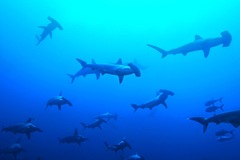
Scalloped hammerhead
Last confirmed Feb 10, 2026 · 23 records
Very likely
Most dives
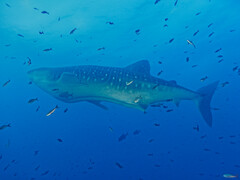
Whale shark
Last confirmed Apr 29, 2026 · 47 records
Very likely
Most dives
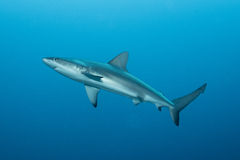
Galapagos shark
Last confirmed Oct 8, 2024 · 2 records
Sometimes
About 1 in 3 dives
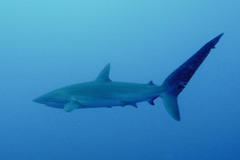
Silky shark
Last confirmed Aug 7, 2025 · 1 records
Sometimes
About 1 in 3 dives
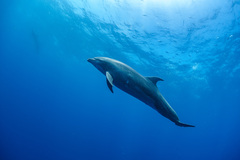
Bottlenose dolphin
Last confirmed Feb 9, 2026 · 2 records
Sometimes
About 1 in 3 dives
Gear
Basic kit
For this site
- Coldwater wetsuit + hooded vest · Cold Humboldt upwellings — hypothermia risk on the third dive of the day if you're under-suited.↗
- Reef hook with safety lanyard · Standard procedure: hook into rock, watch hammerheads parade past at safe distance.↗
- Nautilus Lifeline or PLB · Surface currents have separated divers from boats here. Personal beacon is essential.↗
- Air-integrated dive computer · Multi-tank cold deep dives — accurate gas/NDL tracking matters more than at a warm reef.↗