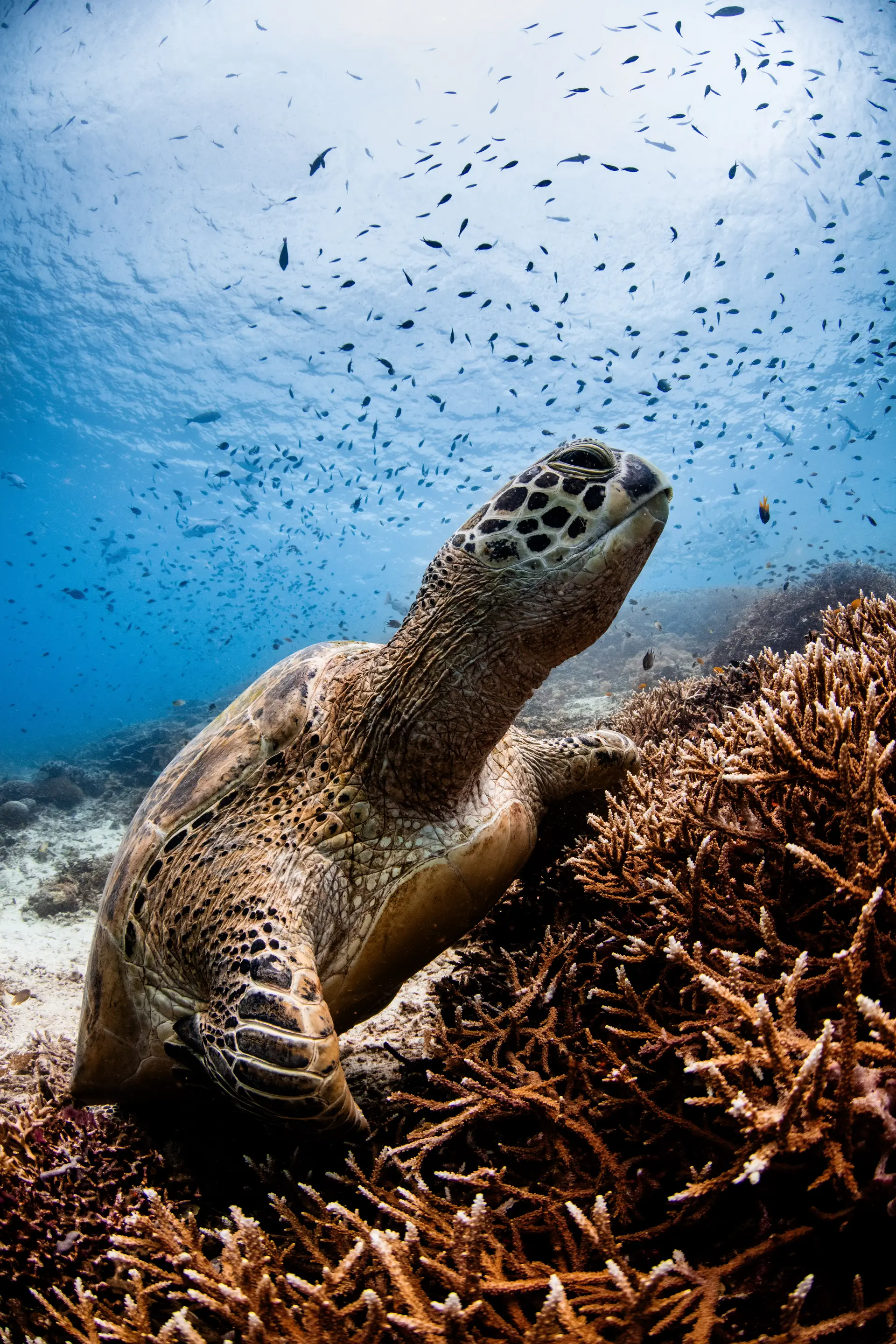
The Cauldron / Shotgun
Komodo National Park · Indonesia
A high energy channel drift between Gili Lawa Laut and Gili Lawa Darat in north Komodo. Divers start over coral gardens and a bowl shaped sandy basin, then time the tide for the fast Shotgun section, where the current funnels through the pass. Reef mantas, sharks, giant trevally and dense reef fish can appear when the flow is right.
Conditions
Depth
8 to 30 m
Open water and up
Current
Often strong
Can pick up on the edge
Visibility
15 to 25 m
Clearest in the calm season
Water
25 to 29°C
Tropical wetsuit
Month by month
| Month | Jan | Feb | Mar | Apr | May | Jun | Jul | Aug | Sep | Oct | Nov | Dec |
|---|---|---|---|---|---|---|---|---|---|---|---|---|
| Water (°C) | 27 | 27 | 27 | 27 | 26 | 26 | 25 | 25 | 26 | 27 | 27 | 27 |
| Vis (m) | 8 | 8 | 10 | 15 | 15 | 15 | 15 | 15 | 15 | 15 | 12 | 8 |
| Current | Strong | Strong | Strong | Strong | Strong | Strong | Strong | Strong | Strong | Strong | Strong | Strong |
Your chances of seeing each animal
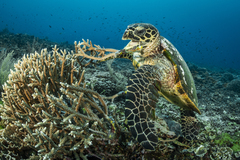
Hawksbill turtle
Last confirmed Jun 21, 2026 · 65 records
Almost always
Nearly every dive
Schooling snapper
Last confirmed Jun 21, 2026 · 57 records
Almost always
Nearly every dive
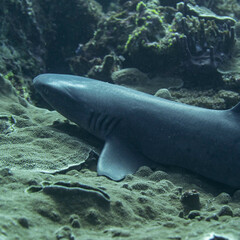
Whitetip reef shark
Last confirmed Jun 21, 2026 · 37 records
Very likely
Most dives
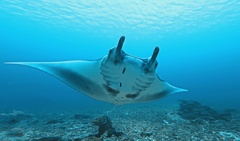
Reef manta ray
Last confirmed May 15, 2026 · 45 records
Very likely
Most dives
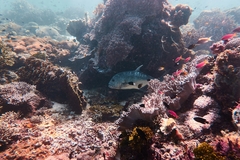
Giant trevally
Last confirmed Jun 21, 2026 · 17 records
Likely
About 6 in 10 dives
Gear
Basic kit
For this site
- SMB · The final drift can separate divers from the reef, and boat pickup is often in moving water.
- Reef hook · Some guides permit hooks on dead substrate for brief holds near manta or shark action, but only use one if the briefing allows it.