Spanish Dancer
Hexabranchus sanguineus
Sighting evidence at Chole Bay Gardens, Mafia Island
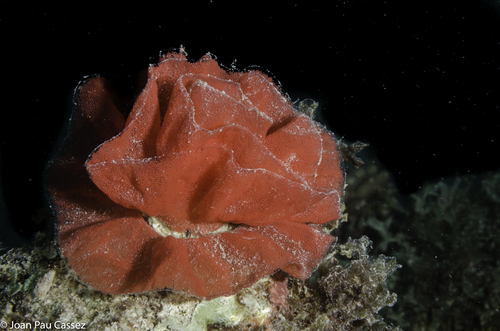
Photo: Jean-Paul Cassez · CC BY-NC
Spanish dancers are the most spectacular nudibranchs in the Indo-Pacific, and Chole Bay Gardens is one of the most reliable sites in East Africa for encountering them — both as stationary grazers on sponge-covered rock during the day and as swimming, undulating nocturnal predators on night dives. Their common name derives from the flowing red and white mantle undulation they display when swimming, which serves as a warning to predators advertising their toxicity: they sequester toxic compounds from the halimeda sponges they consume and incorporate them into the egg ribbons they produce, protecting their young from consumption. Individuals found during the day are typically much smaller than the night-active swimmers — up to 60 centimetres in length — that emerge after dark to cover large areas of reef in search of mates and feeding opportunities.
Evidence at this site
0 records within 25 km
Confidence: low