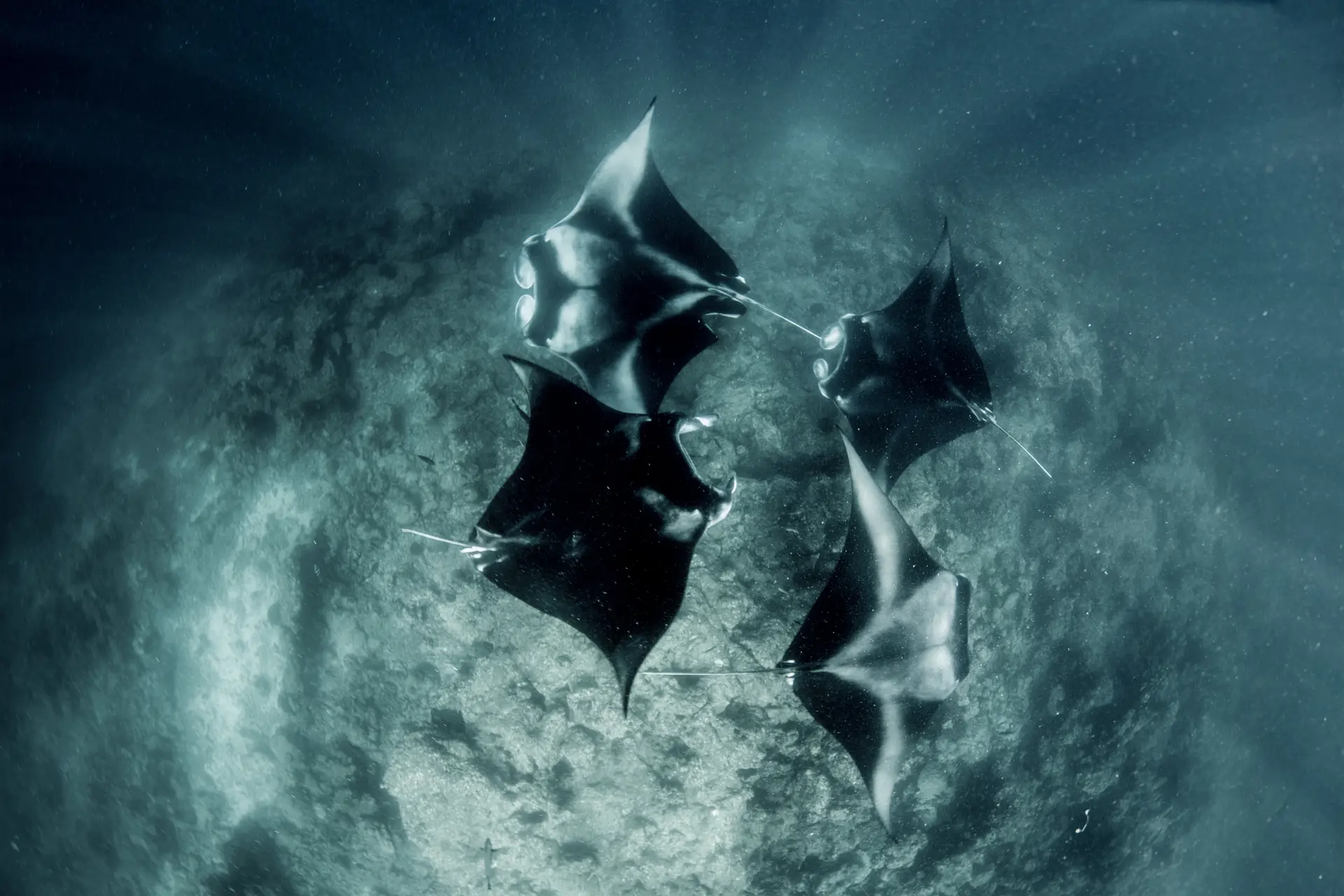
Lankan Manta Point
North Male Atoll · Maldives
Gently sloping outer reef on the eastern flank of Lankanfinolhu (Paradise Island), the most visited manta cleaning station in North Malé Atoll. Three coral bommies at 10–18 m act as fixed cleaning stations where reef mantas queue for wrasse to pick parasites from gills and underside, sometimes a dozen at a time. The reef top sits at 5 m and the sand slopes off to 30 m; current usually runs north to south along the outside of the atoll. Eagle rays, mobulas, whitetip reef sharks and napoleon wrasse pass through. Peak action is August through November when the southwest monsoon pushes plankton up the eastern atoll wall.
Conditions
Depth
5 to 30 m
Open water and up
Current
Can be moderate
Can pick up on the edge
Visibility
20 to 30 m
Clearest in the calm season
Water
27 to 30°C
Tropical wetsuit
Month by month
| Month | Jan | Feb | Mar | Apr | May | Jun | Jul | Aug | Sep | Oct | Nov | Dec |
|---|---|---|---|---|---|---|---|---|---|---|---|---|
| Water (°C) | 27 | 27 | 28 | 28 | 28 | 27 | 27 | 27 | 27 | 28 | 28 | 27 |
| Vis (m) | 25 | 25 | 25 | 25 | 15 | 10 | 10 | 15 | 15 | 20 | 20 | 25 |
| Current | Gentle | Gentle | Gentle | Gentle | Moderate | Moderate | Moderate | Strong | Strong | Moderate | Moderate | Gentle |
Your chances of seeing each animal
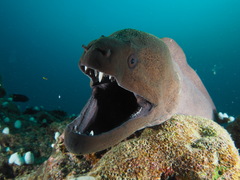
Giant moray
Last confirmed May 31, 2026 · 26 records
Very likely
Most dives
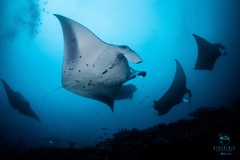
Reef manta ray
Last confirmed May 15, 2026 · 45 records
Very likely
Most dives
Whitetip reef shark
Last confirmed Sep 29, 2025 · 9 records
Very likely
Most dives
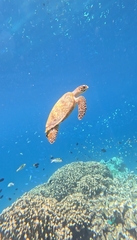
Hawksbill turtle
Last confirmed Apr 26, 2026 · 14 records
Very likely
Most dives
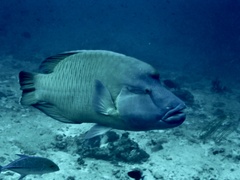
Napoleon wrasse
Last confirmed Dec 21, 2025 · 5 records
Likely
About 6 in 10 dives
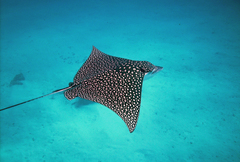
Spotted eagle ray
Expected
Known here, not yet in recent logs
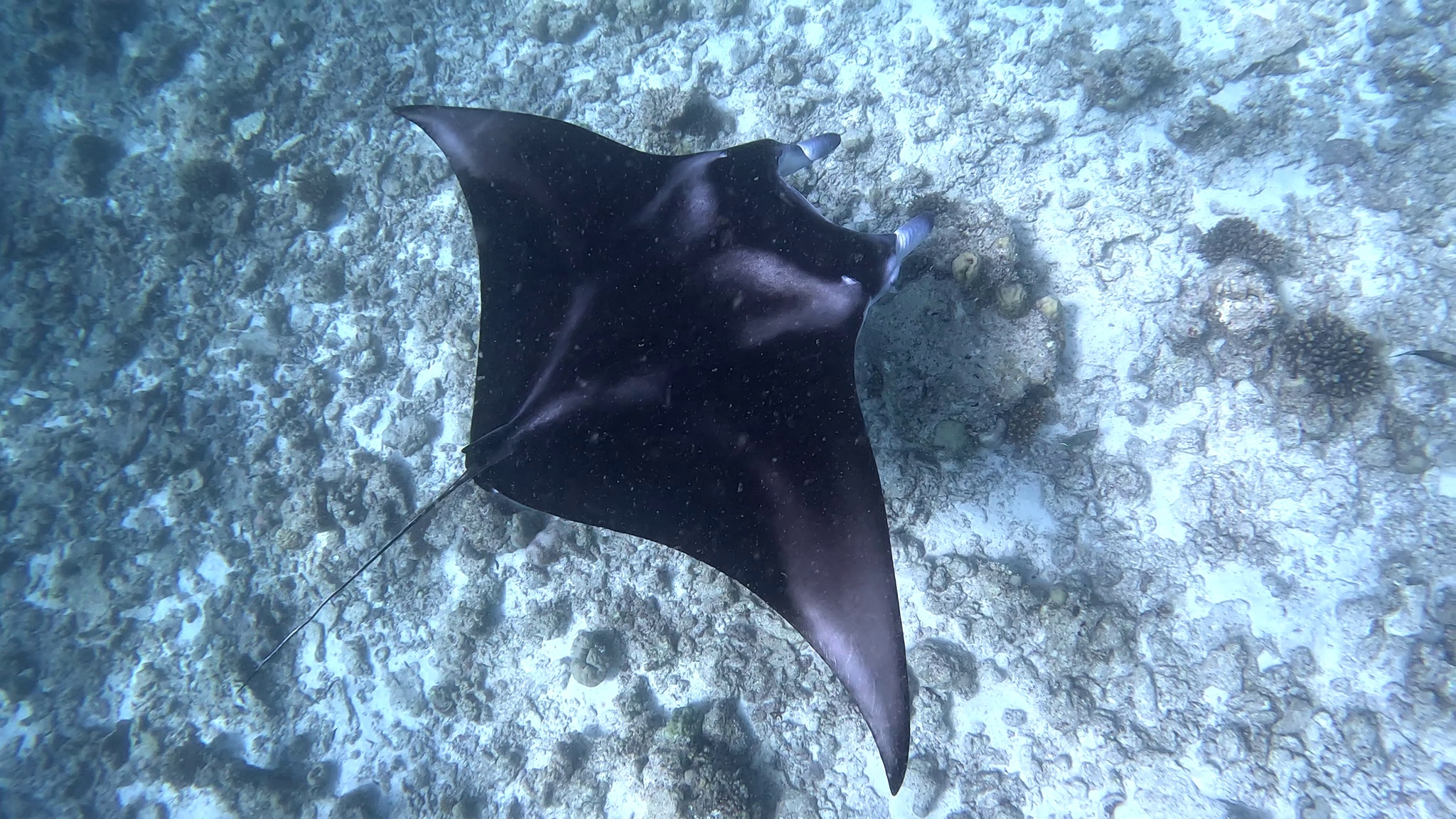
Mobula ray
Expected
Known here, not yet in recent logs
Gear
Basic kit
For this site
- Reef hook · When current runs hard along the outer reef the hook lets you settle on a rubble patch off the cleaning stations without finning over coral.
- SMB + reel · Standard exit is a drift off the outer reef; surface marker is required for boat pickup.↗