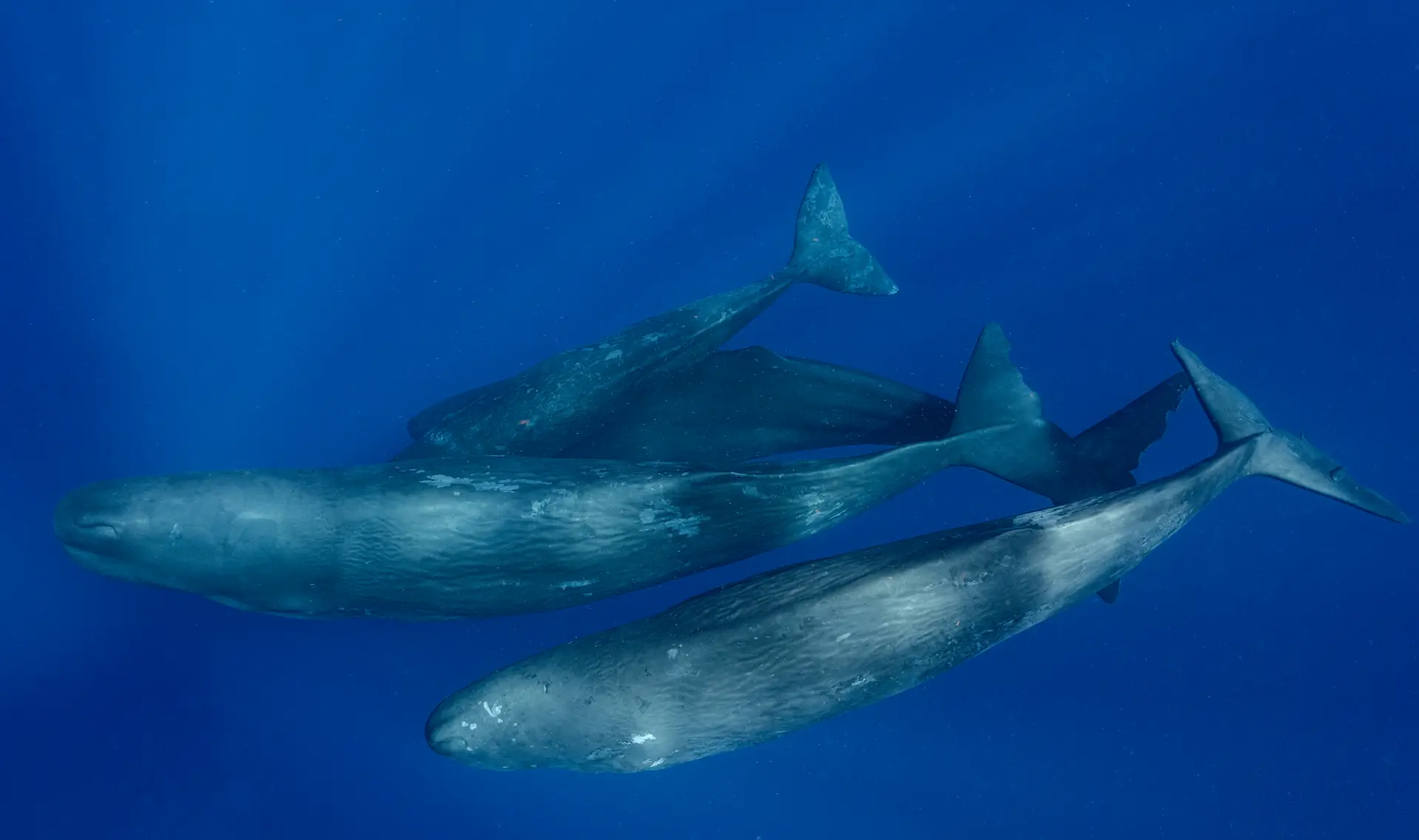
Chichijima Dolphin Swim
Ogasawara · Japan
In-water encounter with resident pods of Indo-Pacific bottlenose and spinner dolphins along the western and southern coasts of Chichijima, the main island of the Ogasawara (Bonin) archipelago — 1,000 km south of Tokyo and accessible only by a 24-hour overnight ferry from Takeshiba. Boats spot pods from the surface, then drop snorkellers ahead of the line of travel. Bottlenoses are slow, curious, and often hold eye contact for whole passes; spinners move in larger, faster schools and frequently spiral past at 5–10 m. The surrounding reef hosts the wrought iron butterflyfish (Chaetodon daedalma), a species endemic to southern Japan that is unusually common here. The Ogasawara group is a UNESCO World Heritage Site (2011), often called Japan's Galápagos for its isolated endemic fauna.
Conditions
Depth
0 to 15 m
Good for beginners
Current
Usually gentle
Can pick up on the edge
Visibility
20 to 30 m
Clearest in the calm season
Water
21 to 29°C
3mm wetsuit
Month by month
| Month | Jan | Feb | Mar | Apr | May | Jun | Jul | Aug | Sep | Oct | Nov | Dec |
|---|---|---|---|---|---|---|---|---|---|---|---|---|
| Water (°C) | 21 | 21 | 21 | 22 | 24 | 26 | 27 | 28 | 27 | 25 | 24 | 22 |
| Vis (m) | 20 | 20 | 20 | 20 | 25 | 25 | 30 | 30 | 25 | 20 | 20 | 20 |
| Current | Gentle | Gentle | Gentle | Gentle | Gentle | Gentle | Gentle | Gentle | Moderate | Gentle | Gentle | Gentle |
Your chances of seeing each animal
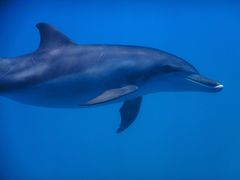
Indo-Pacific bottlenose dolphin
Last confirmed Sep 15, 2025 · 65 records
Almost always
Nearly every dive
Spinner dolphin
Last confirmed Mar 10, 2025 · 1 records
Likely
About 6 in 10 dives
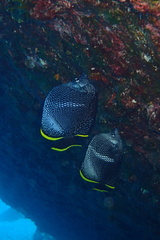
Wrought-iron butterflyfish
Last confirmed Apr 25, 2026 · 3 records
Likely
About 6 in 10 dives
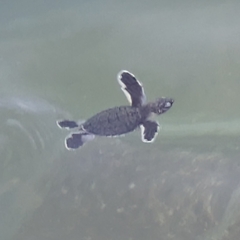
Green turtle
Last confirmed Jun 13, 2026 · 5 records
Likely
About 6 in 10 dives
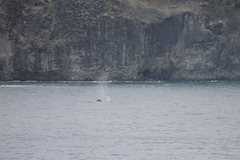
Humpback whale
Last confirmed Apr 21, 2026 · 6 records
Sometimes
About 1 in 3 dives
Sperm whale
Expected
Known here, not yet in recent logs
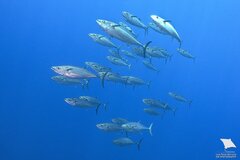
Dogtooth tuna
Expected
Known here, not yet in recent logs
Gear
Basic kit
For this site
- Long freediving fins · The dolphins set the pace. A few extra seconds of speed on the kick is the difference between a full pass and watching them disappear.
- Snorkel and mask (no scuba) · By prefecture rule and pod behaviour, encounters are snorkel/freedive only — bubbles drive the dolphins off.