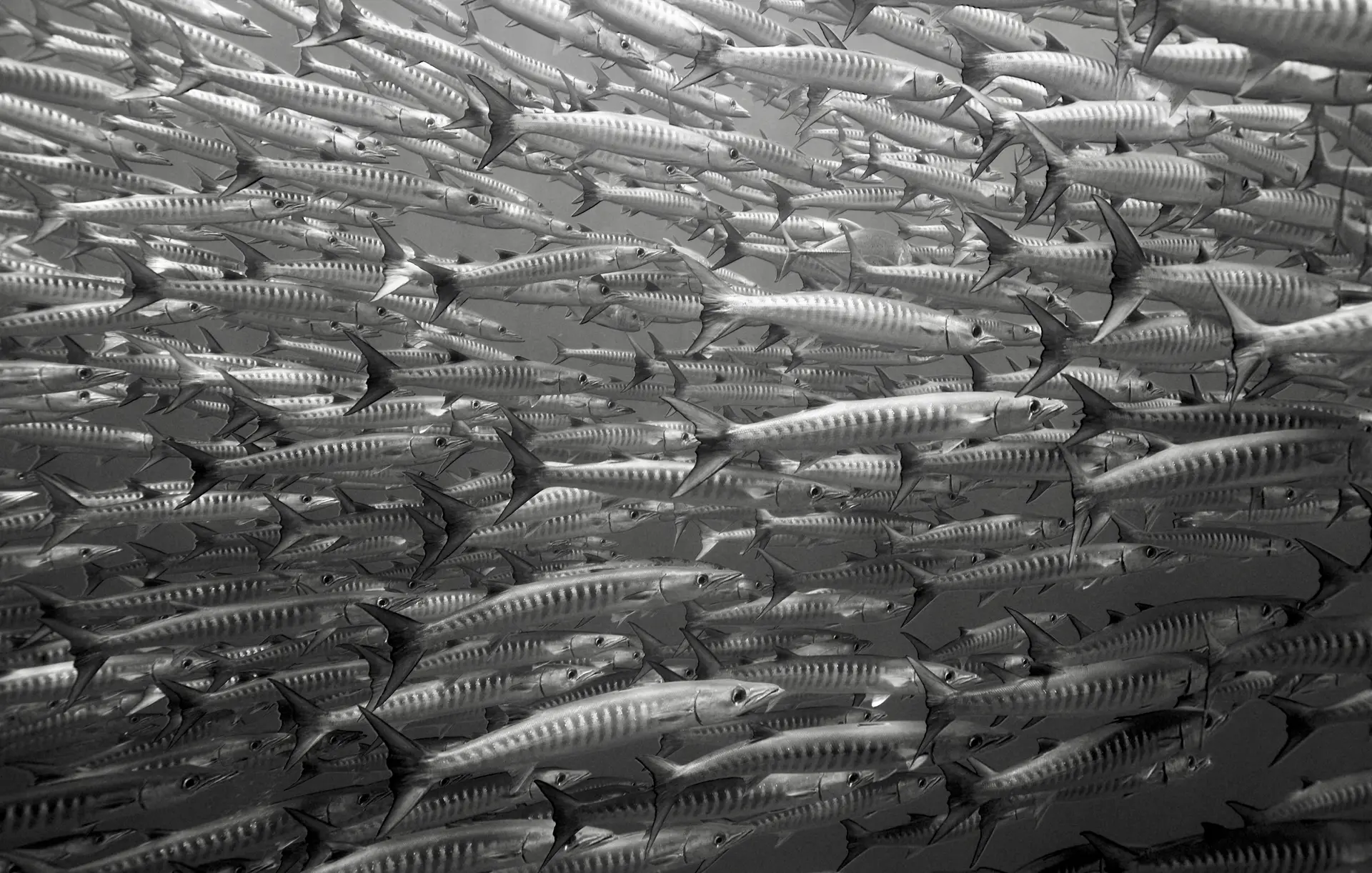
Blue Corner
Rock Islands · Palau
A triangular reef plateau jutting off the northwest tip of Ngemelis Island, where Palau's barrier reef drops sharply into open ocean and currents accelerate around the point. Divers descend to a 15-20 m ledge, set a reef hook into rubble, and watch a near permanent rotation of grey reef sharks, schooling bigeye trevally, chevron barracuda, and Napoleon wrasse hold against the flow. Unhook on the inside for a drift past hard coral and the occasional spotted eagle ray. Currents shift direction and strength quickly — the site is the reason Palauans invented the reef hook.
Conditions
Depth
8 to 30 m
Open water and up
Current
Can be moderate
Can pick up on the edge
Visibility
15 to 25 m
Clearest in the calm season
Water
27 to 30°C
Tropical wetsuit
Month by month
| Month | Jan | Feb | Mar | Apr | May | Jun | Jul | Aug | Sep | Oct | Nov | Dec |
|---|---|---|---|---|---|---|---|---|---|---|---|---|
| Water (°C) | 27 | 27 | 28 | 28 | 29 | 29 | 29 | 29 | 29 | 28 | 28 | 27 |
| Vis (m) | 20 | 25 | 25 | 25 | 20 | 15 | 15 | 15 | 15 | 15 | 20 | 20 |
| Current | Strong | Strong | Moderate | Moderate | Moderate | Moderate | Moderate | Moderate | Moderate | Moderate | Moderate | Strong |
Your chances of seeing each animal
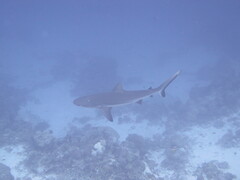
Grey reef shark
Last confirmed May 30, 2026 · 52 records
Almost always
Nearly every dive
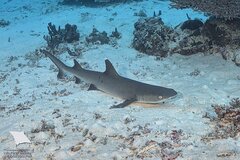
Whitetip reef shark
Last confirmed May 30, 2026 · 58 records
Almost always
Nearly every dive
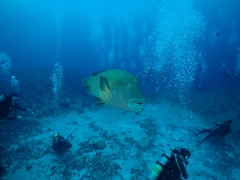
Napoleon wrasse
Last confirmed Jun 8, 2026 · 35 records
Very likely
Most dives
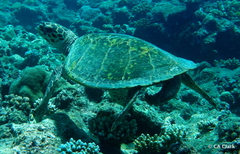
Hawksbill turtle
Last confirmed May 24, 2026 · 38 records
Very likely
Most dives
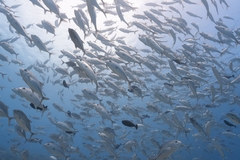
Bigeye trevally
Last confirmed Mar 2, 2026 · 14 records
Very likely
Most dives
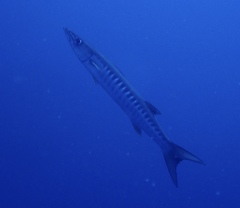
Chevron barracuda
Last confirmed Jan 10, 2026 · 6 records
Very likely
Most dives
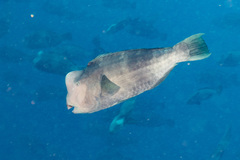
Bumphead parrotfish
Last confirmed Sep 5, 2025 · 11 records
Likely
About 6 in 10 dives
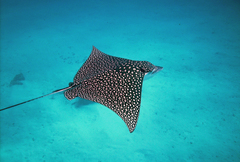
Spotted eagle ray
Expected
Known here, not yet in recent logs
Gear
Basic kit
For this site
- Reef hook · Currents up to 3 knots reverse direction at slack. Hooking into rubble at the 15-20 m ledge is the only practical way to watch the shark line without burning air.
- Surface marker buoy · Drift exits over open water — operators require an SMB deployed on ascent for boat pickup.↗