Planning a trip?
Hotels, dive operators, gear, and how to get here are on the SS President Coolidge location page.
Overview
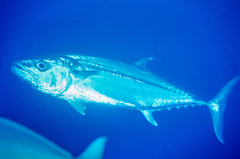
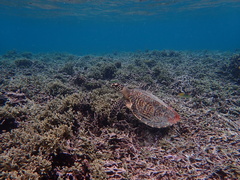
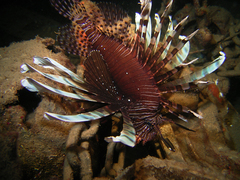
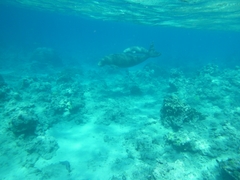
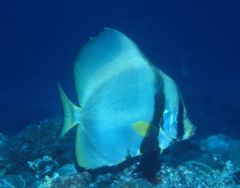
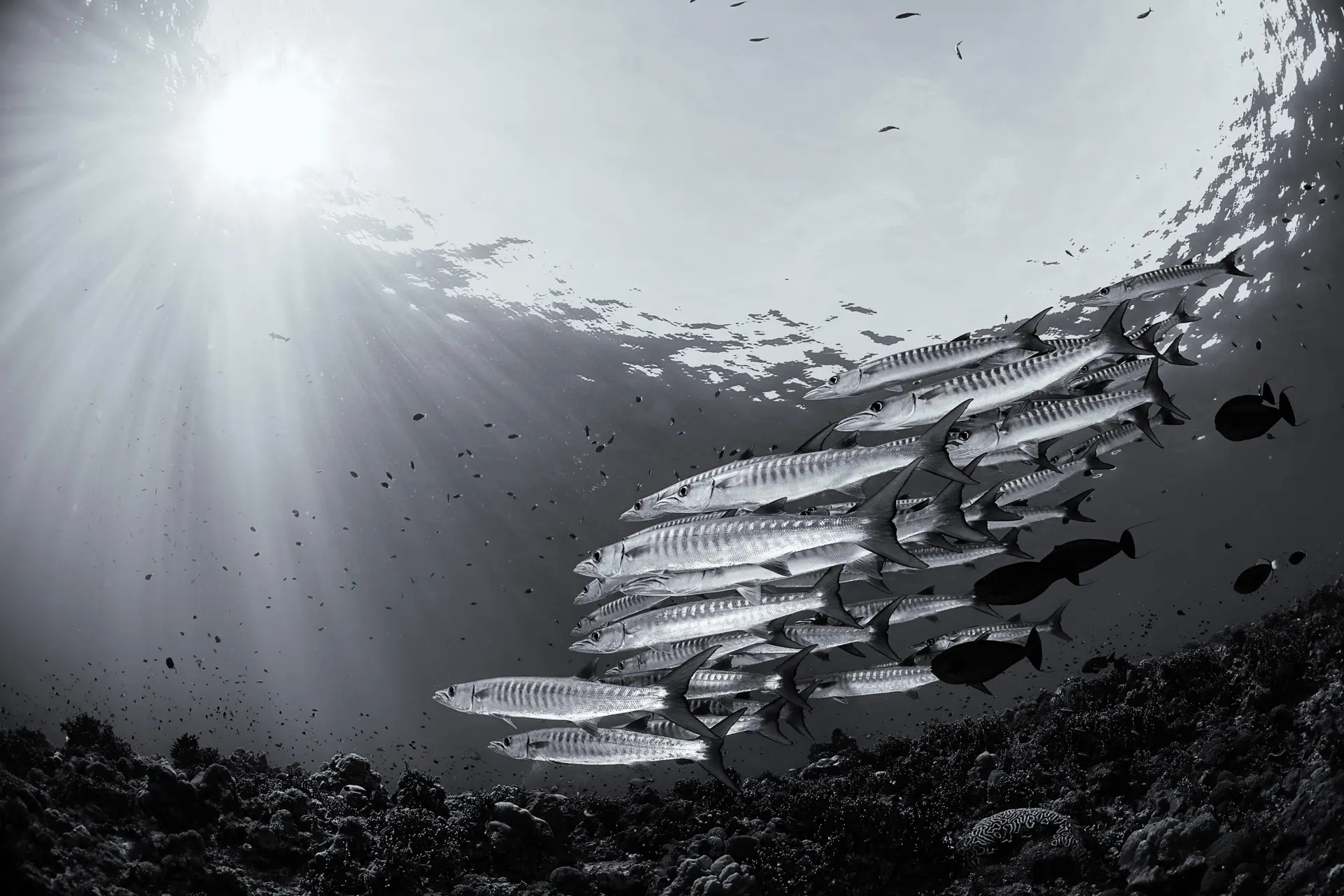
Shore-entry dive over the largest WWII military surplus dump in the world, 6 km east of Luganville on Segond Channel. When the US Navy abandoned its Espiritu Santo base in 1945 it offered the gear to the incoming French-British condominium administration; the offer was refused, so Seabees bulldozed bulldozers, jeeps, semi-trailers, forklifts, cranes, ambulances, crated Coke bottles and sheet-tin straight off a purpose-built ramp into the sea. The debris field runs several hundred metres along a coral-sand slope that drops from 5 m at the beach to about 35 m. Vehicles sit stacked or upended, swallowed by hard coral and gorgonians; schooling barracuda, dogtooth tuna, batfish, lionfish and the occasional turtle work the wreckage, and dugongs are seen rarely in the seagrass shallows above.
Briefing note
Shore dive with easy entry over a sand and coral shelf. Watch for sharp rusted edges on the wreckage and use a torch for poking into stacked vehicles. Wet-season runoff from the Sarakata River cuts visibility December through March; dry season May through October is best. Pairs naturally with an SS President Coolidge dive on the same coast.
What you'll see
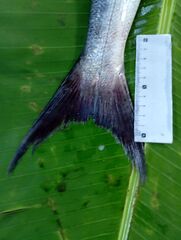
6 species curated- year-roundChevron barracudaPeak: Jan · Feb · Mar · Apr · May · Jun · Jul · Aug · Sep · Oct · Nov · Dec
- year-roundDogtooth tunaPeak: Jan · Feb · Mar · Apr · May · Jun · Jul · Aug · Sep · Oct · Nov · Dec
- year-roundHawksbill turtlePeak: Jan · Feb · Mar · Apr · May · Jun · Jul · Aug · Sep · Oct · Nov · Dec
- year-roundCommon lionfishPeak: Jan · Feb · Mar · Apr · May · Jun · Jul · Aug · Sep · Oct · Nov · Dec
- year-roundPinnate batfishPeak: Jan · Feb · Mar · Apr · May · Jun · Jul · Aug · Sep · Oct · Nov · Dec
- rareDugongPeak: Jan · Feb · Mar · Apr · May · Jun · Jul · Aug · Sep · Oct · Nov · Dec
Sightings evidence
1 record on file- high confidenceChevron barracuda
- Last confirmed
- May 2026
- Recent records
- 65 within 50 km
- Cluster months
- Year-round
Sources & methodology
How we summarise this
We aggregate confirmed occurrence records from GBIF and OBIS within a fixed radius of each dive site. Occurrence records confirm presence and reveal seasonality clustering, but they DO NOT measure per-dive probability — there is no eligible-effort denominator. We deliberately do not publish a numeric '% chance of sighting' from this data.
Sources
- Global Biodiversity Information Facility — GBIF Secretariat
- Ocean Biodiversity Information System — IOC-UNESCO
- OBIS-SEAMAP — Duke University Marine Geospatial Ecology Lab / OBIS
- iNaturalist — California Academy of Sciences & National Geographic Society
- IUCN Red List of Threatened Species — International Union for Conservation of Nature
- WoRMS — World Register of Marine Species — Flanders Marine Institute (VLIZ)
- FishBase — FishBase Consortium
- Atlas of Living Australia — CSIRO / GBIF Australia
- REEF Volunteer Fish Survey — Reef Environmental Education Foundation
The wreck
Ship history- Underwater cultural heritage
Structure · United States
Million Dollar Point
- Sunk
- Oct 1, 1945
- Diveable depth
- 5–35 m
- How she sank
- Scuttled / disposed
Not one ship — an underwater junkyard. After WWII the US Navy dumped bulldozers, trucks, jeeps, cranes, and entire piers off the Espiritu Santo coast when the French and Vanuatuan governments refused to buy the kit for ten cents on the dollar.
Notable features
- bulldozers and forklifts on the seabed
- Coca-Cola bottles
- rifles
- intact vehicle frames
Vessel histories sourced from the Naval History and Heritage Command (DANFS), NOAA ENC Direct, and editorial research. Bathymetry per GEBCO. See the methodology for limits.
Conditions
| Month | Water | Visibility | Current |
|---|---|---|---|
| Jan | 28–30 °C | 10–20 m | mild |
| Feb | 28–30 °C | 10–20 m | mild |
| Mar | 28–30 °C | 10–20 m | mild |
| Apr | 27–29 °C | 15–25 m | mild |
| May | 26–28 °C | 20–30 m | mild |
| Jun | 25–27 °C | 20–30 m | mild |
| Jul | 25–27 °C | 20–30 m | mild |
| Aug | 25–27 °C | 20–30 m | mild |
| Sep | 25–27 °C | 20–30 m | mild |
| Oct | 26–28 °C | 20–30 m | mild |
| Nov | 27–29 °C | 15–25 m | mild |
| Dec | 28–30 °C | 10–20 m | mild |
Season calendar
Peak season highlighted · current month outlined
Next step
Book your trip to SS President Coolidge
Hotels, liveaboards, dive operators, gear recommendations, and travel logistics for the whole region.
Plan your trip →Some links earn us a commission. Learn more