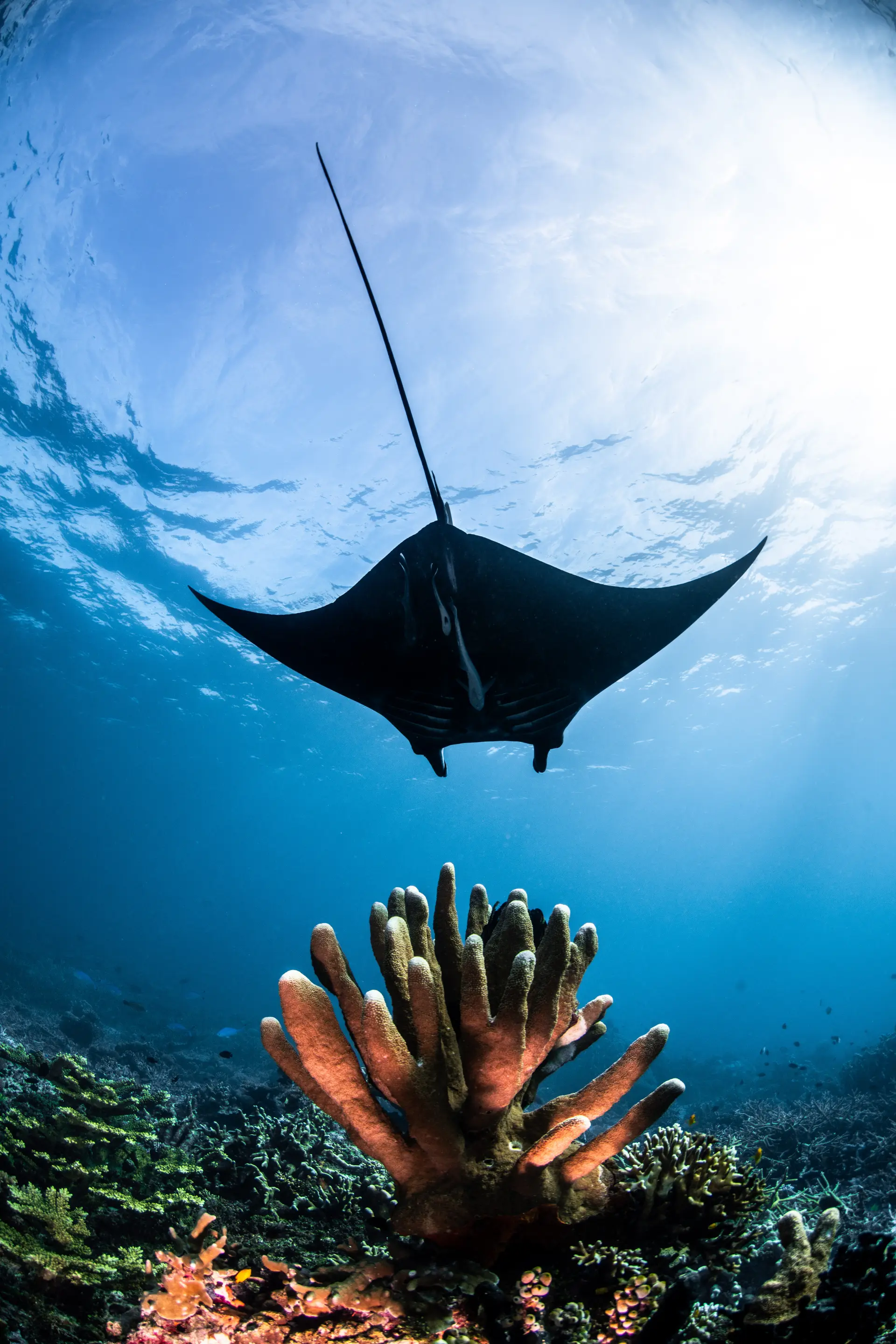
Magic Mountain (Shadow Reef)
Raja Ampat · Indonesia
A submerged seamount in southern Raja Ampat's Misool region, also known as Shadow Reef or Karang Bayangan. The reef rises to snorkelable depth before stepping down into blue water, with manta cleaning stations, grey reef sharks, jacks, barracuda and dense clouds of reef fish. Current is part of the draw here, but it can turn the dive demanding quickly.
Conditions
Depth
5 to 40 m
Advanced depths
Current
Often strong
Can pick up on the edge
Visibility
15 to 30 m
Clearest in the calm season
Water
27 to 30°C
Tropical wetsuit
Month by month
| Month | Jan | Feb | Mar | Apr | May | Jun | Jul | Aug | Sep | Oct | Nov | Dec |
|---|---|---|---|---|---|---|---|---|---|---|---|---|
| Water (°C) | 28 | 28 | 28 | 28 | 28 | 27 | 27 | 27 | 27 | 28 | 28 | 28 |
| Vis (m) | 15 | 15 | 15 | 15 | 12 | 10 | 10 | 10 | 12 | 15 | 15 | 15 |
| Current | Strong | Strong | Strong | Strong | Moderate | Moderate | Moderate | Moderate | Moderate | Strong | Strong | Strong |
Your chances of seeing each animal
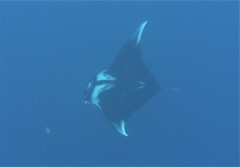
Oceanic manta ray
Last confirmed Apr 15, 2026 · 45 records
Very likely
Most dives
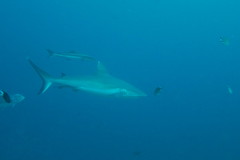
Grey reef shark
Last confirmed Feb 13, 2025 · 2 records
Likely
About 6 in 10 dives
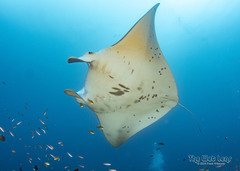
Reef manta ray
Last confirmed Feb 16, 2026 · 10 records
Likely
About 6 in 10 dives
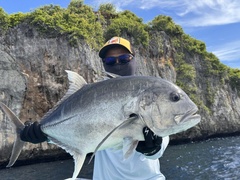
Giant trevally
Last confirmed May 16, 2026 · 5 records
Likely
About 6 in 10 dives
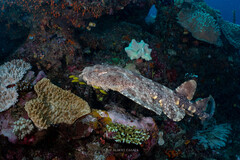
Wobbegong shark
Last confirmed Mar 28, 2026 · 4 records
Sometimes
About 1 in 3 dives
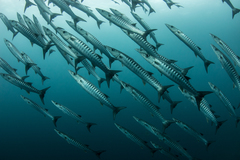
Schooling barracuda
Last confirmed Apr 11, 2026 · 3 records
Sometimes
About 1 in 3 dives
Gear
Basic kit
For this site
- Reef hook · Guides may use hooks only where locally permitted and only on dead substrate when current is running across the cleaning stations.
- SMB · The site is exposed and blue-water ascents are common when groups drift off the seamount.