Planning a trip?
Hotels, dive operators, gear, and how to get here are on the Speyside location page.
Overview
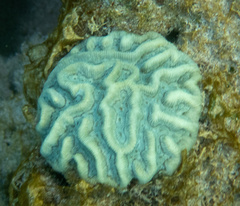
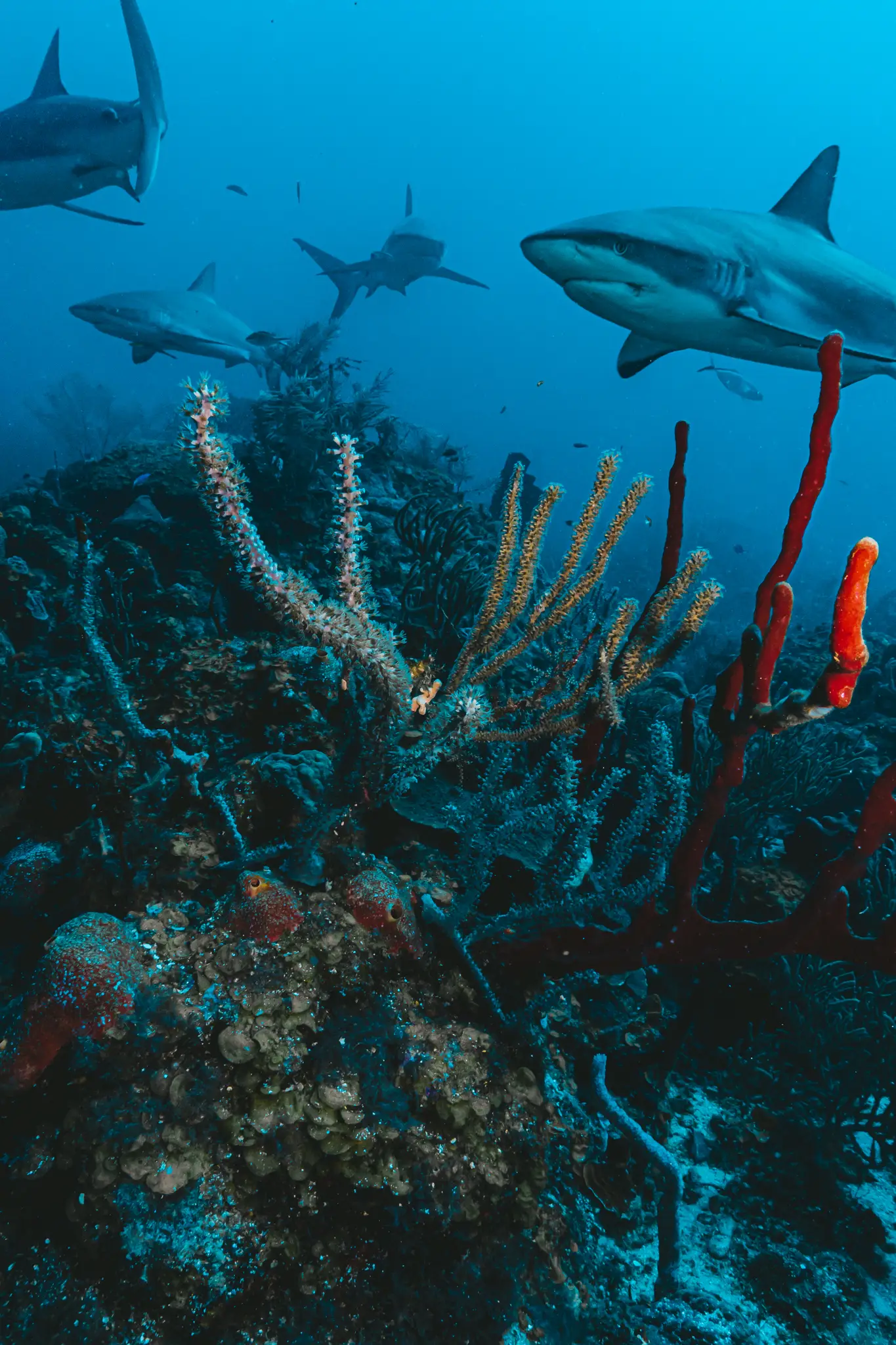
Drift dive off the southern flank of Little Tobago, 3 km east of Speyside, ending at the largest documented brain coral colony on Earth — a boulder brain (Colpophyllia natans) roughly 3 m tall and 5 m across, estimated to be more than two centuries old. The reef slopes from 18 m down past 40 m through forests of gorgonians, sea whips, and barrel sponges fed by nutrient-rich currents pushing up from the Guiana plume.
Briefing note
Drift profile with a moderate-to-strong cross-current is the norm — boats live-pick divers downstream, so an SMB is mandatory and a reel is recommended. The famous brain coral sits at about 18 m on a sandy shelf; do not touch or rest fins on it, the colony is fragile despite its size. Wet-season runoff from the Orinoco River (Jul–Nov) routinely drops visibility into the 10–20 m range and can turn the surface tea-colored; the dry months (Dec–Jun) are the dependable window. Site lies inside protected reef habitat managed under Tobago's marine policy — spearfishing and glove use are discouraged.
What you'll see
7 species curated- year-roundBoulder brain coral
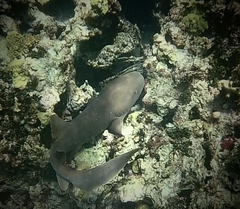
- year-roundNurse shark
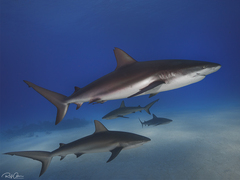
- year-roundCaribbean reef shark
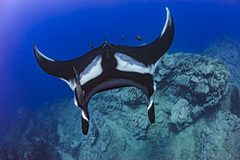
- seasonalManta rayPeak: Apr · May · Jun · Jul · Aug
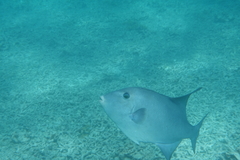
- year-roundOcean triggerfish
- year-roundTarpon
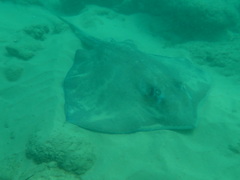
- year-roundSouthern stingray
Sightings evidence
1 record on file- high confidenceBoulder brain coral
- Last confirmed
- May 2026
- Recent records
- 130 within 10 km
Sources & methodology
How we summarise this
We aggregate confirmed occurrence records from GBIF and OBIS within a fixed radius of each dive site. Occurrence records confirm presence and reveal seasonality clustering, but they DO NOT measure per-dive probability — there is no eligible-effort denominator. We deliberately do not publish a numeric '% chance of sighting' from this data.
Sources
- Global Biodiversity Information Facility — GBIF Secretariat
- Ocean Biodiversity Information System — IOC-UNESCO
- OBIS-SEAMAP — Duke University Marine Geospatial Ecology Lab / OBIS
- iNaturalist — California Academy of Sciences & National Geographic Society
- IUCN Red List of Threatened Species — International Union for Conservation of Nature
- WoRMS — World Register of Marine Species — Flanders Marine Institute (VLIZ)
- FishBase — FishBase Consortium
- Atlas of Living Australia — CSIRO / GBIF Australia
- REEF Volunteer Fish Survey — Reef Environmental Education Foundation
Conditions
| Month | Water | Visibility | Current |
|---|---|---|---|
| Jan | 26–27 °C | 20–30 m | moderate |
| Feb | 26–27 °C | 20–30 m | moderate |
| Mar | 26–27 °C | 20–30 m | moderate |
| Apr | 27–28 °C | 20–30 m | moderate |
| May | 27–28 °C | 20–30 m | moderate |
| Jun | 28–29 °C | 15–25 m | moderate |
| Jul | 28–30 °C | 10–20 m | strong |
| Aug | 29–30 °C | 10–20 m | strong |
| Sep | 29–30 °C | 10–20 m | strong |
| Oct | 28–29 °C | 10–20 m | moderate |
| Nov | 27–28 °C | 15–25 m | moderate |
| Dec | 26–27 °C | 20–30 m | moderate |
Season calendar
Peak season highlighted · current month outlined
Next step
Book your trip to Speyside
Hotels, liveaboards, dive operators, gear recommendations, and travel logistics for the whole region.
Plan your trip →Some links earn us a commission. Learn more