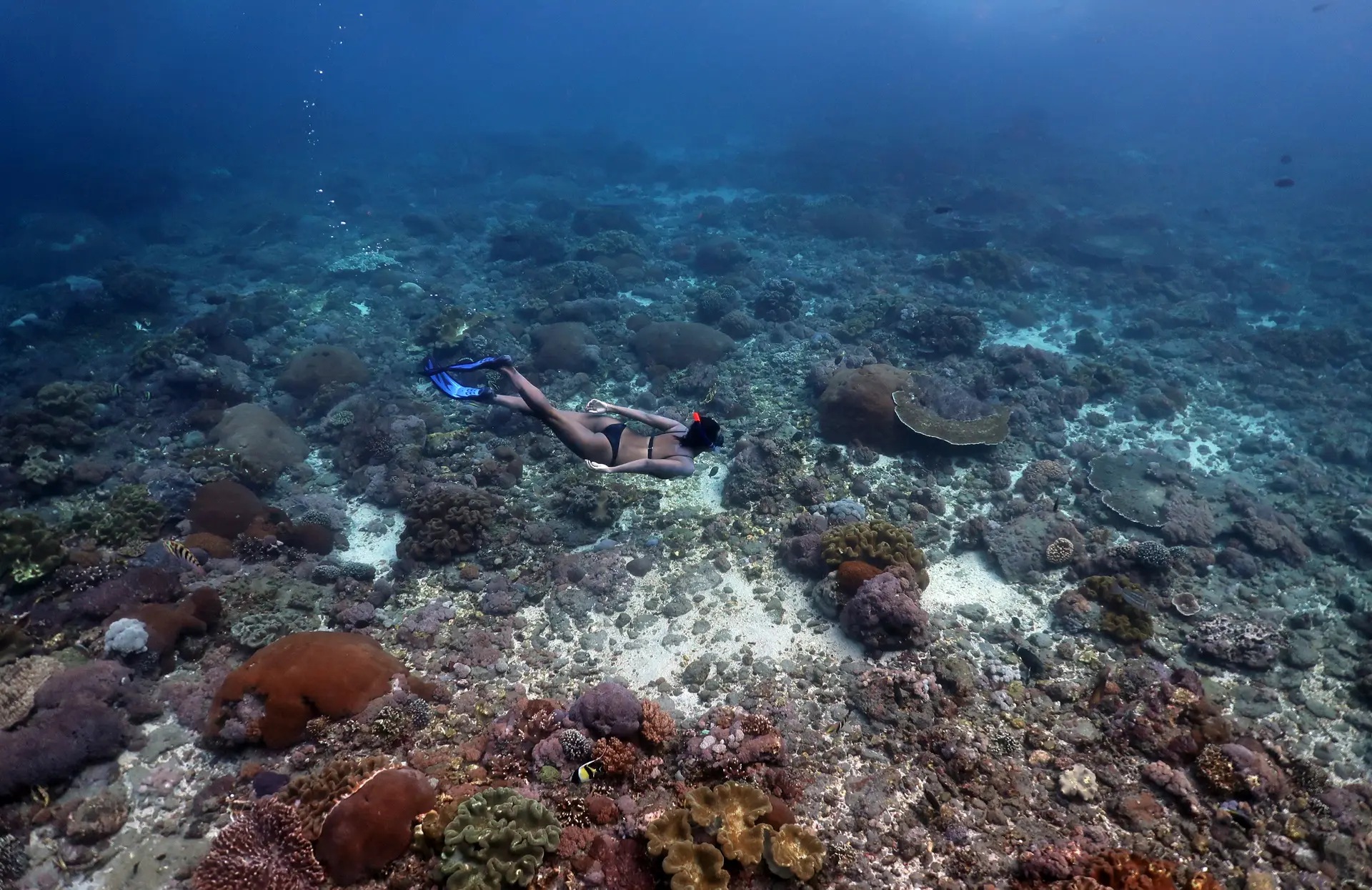
Manta Point (Nusa Penida)
Tulamben · Indonesia
Southwest-coast cleaning station off Batu Lumbung where reef mantas queue up at coral bommies while cleaner wrasse pick parasites from their gill arches. Action begins at 4 m and the wall steps down to about 25 m. Cooler upwelled water from the Lombok Strait — often dropping to 22 °C — and Indian Ocean swell separate this site from the calmer reefs of northern Bali. Mantas are resident year round; surface conditions, not animal reliability, decide whether the boat runs. Occasional oceanic mantas and the rare mola mola pass through during the July–October upwelling.
Conditions
Depth
5 to 25 m
Open water and up
Current
Usually gentle
Can pick up on the edge
Visibility
15 to 25 m
Clearest in the calm season
Water
22 to 29°C
3mm wetsuit
Month by month
| Month | Jan | Feb | Mar | Apr | May | Jun | Jul | Aug | Sep | Oct | Nov | Dec |
|---|---|---|---|---|---|---|---|---|---|---|---|---|
| Water (°C) | 27 | 27 | 27 | 26 | 24 | 22 | 22 | 22 | 23 | 24 | 26 | 27 |
| Vis (m) | 10 | 10 | 10 | 15 | 15 | 15 | 15 | 15 | 15 | 15 | 10 | 10 |
| Current | Gentle | Gentle | Gentle | Gentle | Moderate | Moderate | Moderate | Moderate | Moderate | Gentle | Gentle | Gentle |
Your chances of seeing each animal
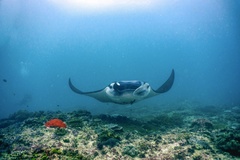
Reef manta ray
Last confirmed May 15, 2026 · 65 records
Almost always
Nearly every dive
Bluestreak cleaner wrasse
Last confirmed Apr 17, 2026 · 10 records
Likely
About 6 in 10 dives
Whitetip reef shark
Last confirmed Jun 5, 2026 · 7 records
Likely
About 6 in 10 dives
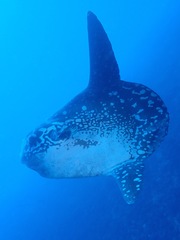
Ocean sunfish (mola)
Last confirmed May 15, 2026 · 26 records
Likely
About 6 in 10 dives
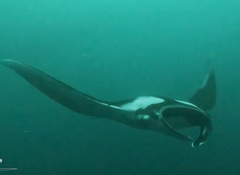
Oceanic manta ray
Expected
Known here, not yet in recent logs
Gear
Basic kit
For this site
- 5mm wetsuit · Lombok Strait upwelling pulls water down to 22 °C in the dry season — colder than the 3mm setup most divers bring from Tulamben or Sanur.
- Reef hook / patience · Stay off the bottom and behind the cleaning bommies. Pushy divers send the mantas off and end the show for everyone.