Planning a trip?
Hotels, dive operators, gear, and how to get here are on the Tulamben location page.
Overview
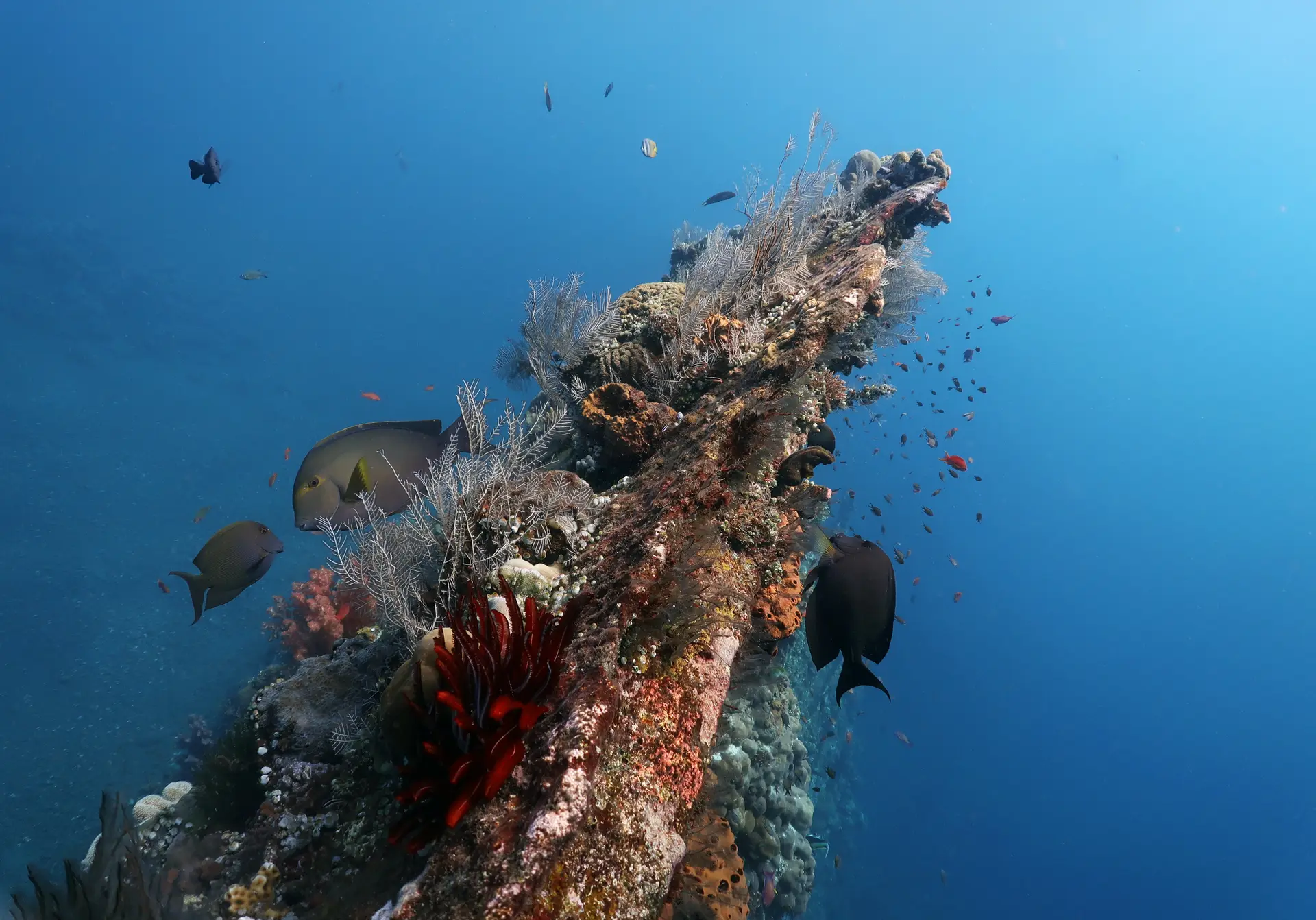
A WWII US Army cargo ship torpedoed in 1942 and pushed into the sea by the 1963 Mount Agung eruption. The 120 m hull now rests parallel to shore between 5 and 30 m, encrusted in soft coral and sponges. Beach entry makes it one of the most accessible major wrecks in the world.
Briefing note
Dive at dawn to beat the day-trip crowd from south Bali.
What you'll see
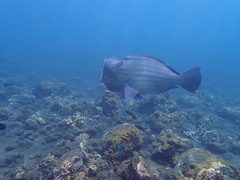
5 species curated- year-roundBumphead parrotfish
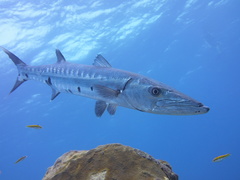
- year-roundGreat barracuda
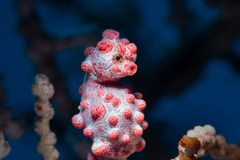
- year-roundPygmy seahorse
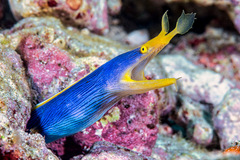
- year-roundRibbon eel
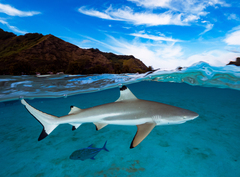
- rareBlacktip reef shark
Sightings evidence
1 record on file- high confidenceBumphead parrotfish
- Last confirmed
- May 2026
- Recent records
- 130 within 10 km
Sources & methodology
How we summarise this
We aggregate confirmed occurrence records from GBIF and OBIS within a fixed radius of each dive site. Occurrence records confirm presence and reveal seasonality clustering, but they DO NOT measure per-dive probability — there is no eligible-effort denominator. We deliberately do not publish a numeric '% chance of sighting' from this data.
Sources
- Global Biodiversity Information Facility — GBIF Secretariat
- Ocean Biodiversity Information System — IOC-UNESCO
- OBIS-SEAMAP — Duke University Marine Geospatial Ecology Lab / OBIS
- iNaturalist — California Academy of Sciences & National Geographic Society
- IUCN Red List of Threatened Species — International Union for Conservation of Nature
- WoRMS — World Register of Marine Species — Flanders Marine Institute (VLIZ)
- FishBase — FishBase Consortium
- Atlas of Living Australia — CSIRO / GBIF Australia
- REEF Volunteer Fish Survey — Reef Environmental Education Foundation
The wreck
Ship history- Underwater cultural heritage
Freighter · United States
USAT Liberty
- Built
- 1918
- Sunk
- Jan 11, 1942
- Length
- 120 m
- Tonnage
- 6,211
- Diveable depth
- 5–30 m
- How she sank
- Sunk in wartime
US Army Transport torpedoed by a Japanese submarine in the Lombok Strait and beached at Tulamben. Pushed off the beach into deeper water by a Mount Agung eruption in 1963. Now a shallow shore dive, broken open and heavily encrusted with coral.
Notable features
- bow gun emplacement
- rudder structure
- abundant macro life inside the broken hull
Vessel histories sourced from the Naval History and Heritage Command (DANFS), NOAA ENC Direct, and editorial research. Bathymetry per GEBCO. See the methodology for limits.
Conditions
| Month | Water | Visibility | Current |
|---|---|---|---|
| Jan | 27–29 °C | 15–25 m | mild |
| Feb | 27–29 °C | 15–25 m | mild |
| Mar | 28–29 °C | 20–30 m | mild |
| Apr | 28–30 °C | 20–30 m | mild |
| May | 28–30 °C | 20–30 m | mild |
| Jun | 26–28 °C | 20–30 m | mild |
| Jul | 25–27 °C | 20–30 m | mild |
| Aug | 25–27 °C | 20–30 m | mild |
| Sep | 26–28 °C | 20–30 m | mild |
| Oct | 27–29 °C | 20–30 m | mild |
| Nov | 27–29 °C | 15–25 m | mild |
| Dec | 27–29 °C | 15–25 m | mild |
Season calendar
Peak season highlighted · current month outlined
Gear for this site
Beyond the basic kit- Dive light — Penetrable sections of the hull are dark even at midday.
Next step
Book your trip to Tulamben
Hotels, liveaboards, dive operators, gear recommendations, and travel logistics for the whole region.
Plan your trip →Some links earn us a commission. Learn more