Planning a trip?
Hotels, dive operators, gear, and how to get here are on the Ari Atoll location page.
Overview
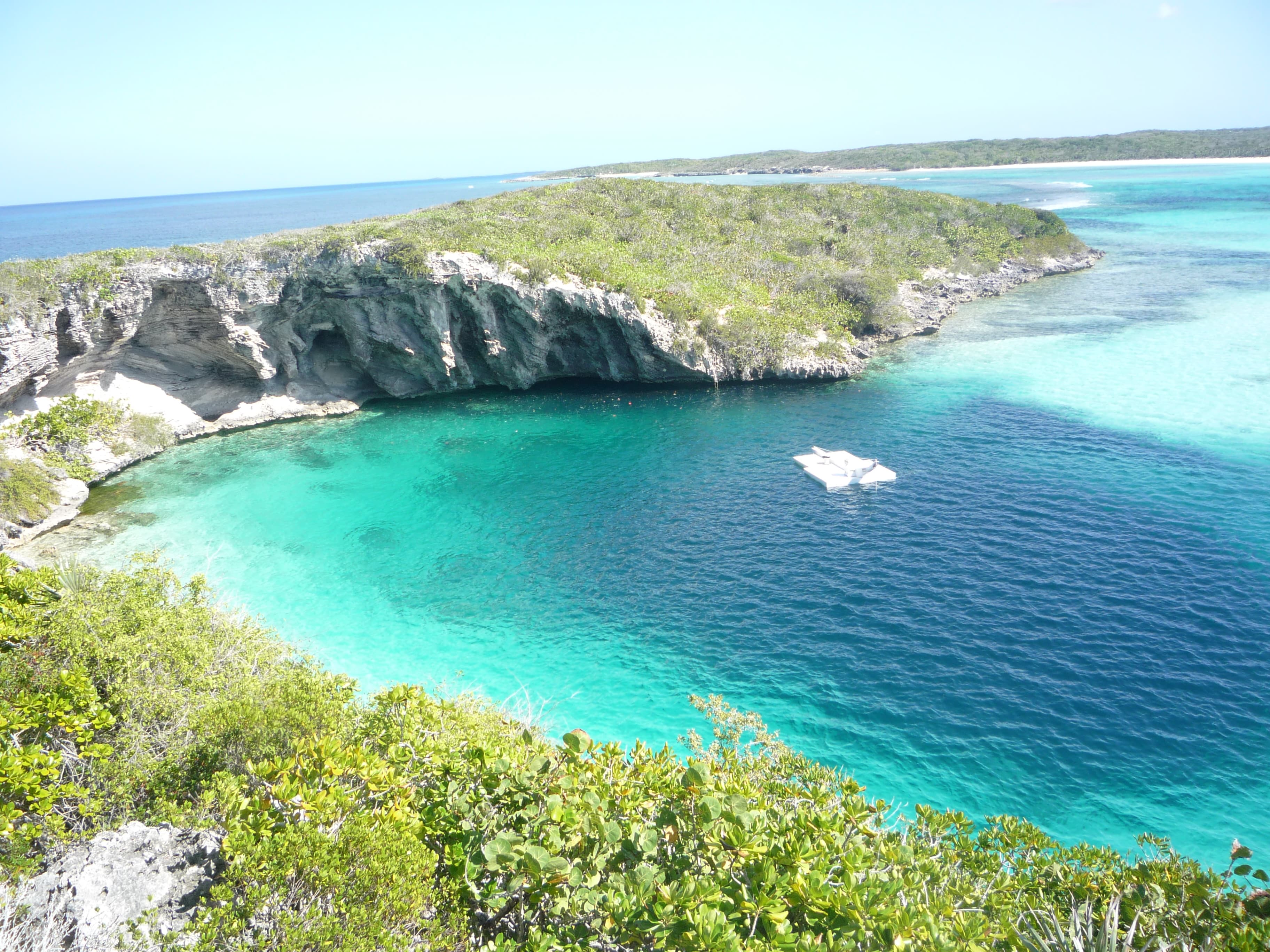
Descend into Dean's Blue Hole, the world's second deepest known blue hole, plunging 202 meters into the earth near Clarence Town, Long Island. Famous for its dramatic geological formations and as a premier freediving destination, the hole offers exceptional visibility into its profound depths. The rim hosts unique marine life, while the interior is a stark, captivating abyss. An unparalleled site for technical divers and freedivers seeking extreme depths and geological wonders.
Briefing note
Access to Dean's Blue Hole is generally unrestricted for recreational and freediving. Be aware of freediving competitions which may limit access temporarily. Technical diving here requires significant experience and appropriate training/equipment due to the extreme depth.
What you'll see
3 species curated- seasonalCaribbean Reef SharkPeak: May · Jun · Jul · Aug · Sep · Oct
- year-roundGreen Sea Turtle
- year-roundSchooling Fish (various)
Sightings evidence
3 records on file- medium confidenceCaribbean Reef Shark
- Last confirmed
- Jun 2024
- Recent records
- 15 within 25 km
- Cluster months
- May, Jun, Jul, Aug, Sep, Oct
- medium confidenceGreen Sea Turtle
- Last confirmed
- Jun 2024
- Recent records
- 20 within 25 km
- low confidenceSchooling Fish (various)
- Last confirmed
- Jun 2024
- Recent records
- 25 within 25 km
Sources & methodology
How we summarise this
We aggregate confirmed occurrence records from GBIF and OBIS within a fixed radius of each dive site. Occurrence records confirm presence and reveal seasonality clustering, but they DO NOT measure per-dive probability — there is no eligible-effort denominator. We deliberately do not publish a numeric '% chance of sighting' from this data.
Sources
- Global Biodiversity Information Facility — GBIF Secretariat
- Ocean Biodiversity Information System — IOC-UNESCO
- OBIS-SEAMAP — Duke University Marine Geospatial Ecology Lab / OBIS
- iNaturalist — California Academy of Sciences & National Geographic Society
- IUCN Red List of Threatened Species — International Union for Conservation of Nature
- WoRMS — World Register of Marine Species — Flanders Marine Institute (VLIZ)
- FishBase — FishBase Consortium
- Atlas of Living Australia — CSIRO / GBIF Australia
- REEF Volunteer Fish Survey — Reef Environmental Education Foundation
Conditions
| Month | Water | Visibility | Current |
|---|---|---|---|
| Jan | 25–27 °C | 15–30 m | none |
| Feb | 25–27 °C | 15–30 m | none |
| Mar | 25–27 °C | 15–30 m | none |
| Apr | 25–27 °C | 15–30 m | none |
| May | 27–29 °C | 15–30 m | none |
| Jun | 27–29 °C | 15–30 m | none |
| Jul | 27–29 °C | 15–30 m | none |
| Aug | 27–29 °C | 15–30 m | none |
| Sep | 26–28 °C | 15–30 m | none |
| Oct | 26–28 °C | 15–30 m | none |
| Nov | 26–28 °C | 15–30 m | none |
| Dec | 26–28 °C | 15–30 m | none |
Season calendar
Next step
Book your trip to Ari Atoll
Hotels, liveaboards, dive operators, gear recommendations, and travel logistics for the whole region.
Plan your trip →Some links earn us a commission. Learn more