Caribbean spiny lobster
Panulirus argus
Sighting evidence at Blowing Rock, Corn Islands
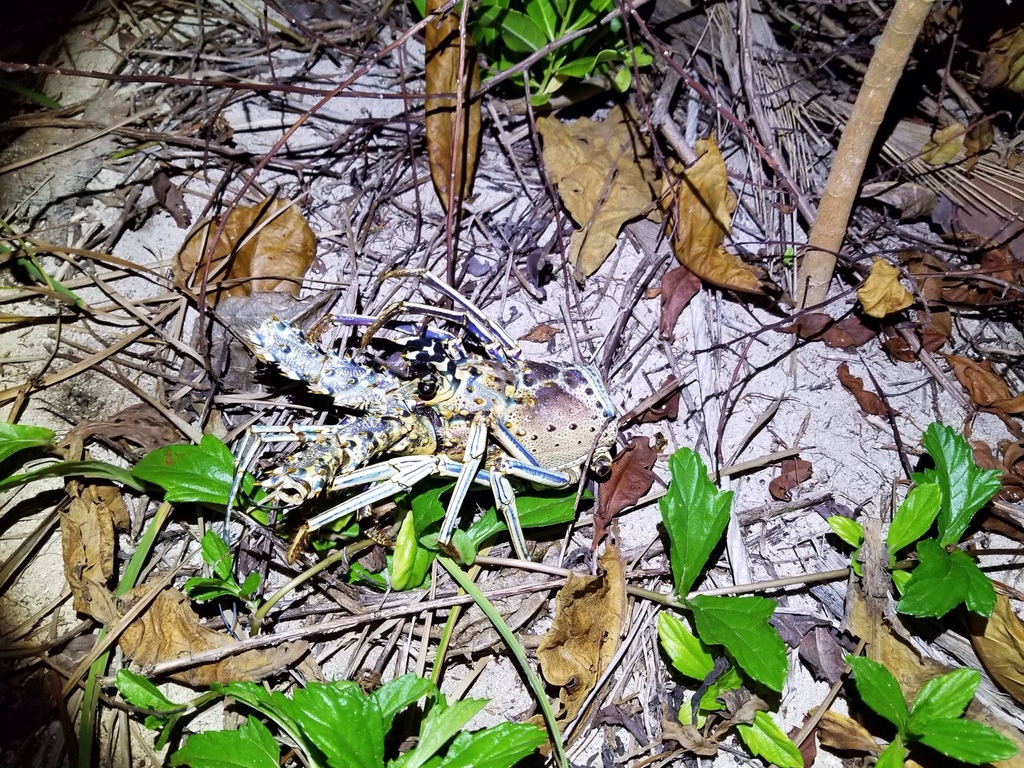
Photo: tresfurieux · © all rights reserved
Spiny lobsters shelter in Blowing Rock's crevices in substantial numbers, emerging after dark to forage on algae, molluscs and detritus. Unlike true lobsters they have no claws, relying instead on antennae that can be longer than their bodies for defence — the antennae produce a rasping sound when scraped together to deter predators. Mass spawning migrations occur in the Caribbean in autumn when lobsters form long queues along the seafloor.
Evidence at this site
0 records within 25 km
Confidence: low