Thornback Ray
Raja clavata
Sighting evidence at Sound of Mull, Oban
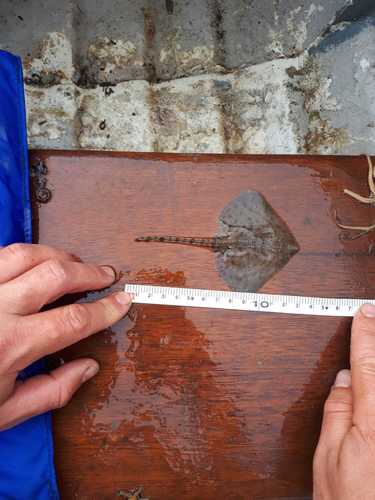
Photo: marnik1 · CC BY-NC
Thornback rays rest on sandy patches among boulders throughout the Sound, perfectly camouflaged against the mixed substrate and detectable only by their outline and the slight movement of spiracles on the dorsal surface. They feed on crustaceans and small fish buried in or moving over the seabed. Female rays deposit characteristic mermaid's purse egg cases among kelp holdfasts, and empty cases are commonly found on dives throughout summer and autumn.
Evidence at this site
1 record within 25 km
Confidence: low