Oceanic Manta Ray
Mobula birostris
Sighting evidence at Muscat Offshore Seamount, Muscat
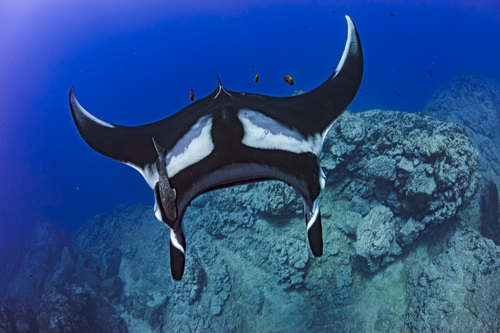
Photo: Programa Marino del Golfo de California · CC BY-NC
The world's largest ray visits the seamount to exploit cleaning stations on the summit and to feed on the dense zooplankton aggregations the upwelling produces. Individual mantas have been identified at this site repeatedly across multiple seasons via their unique ventral spot patterns. They are capable of descending beyond 1000 metres during the day and ascending to warm surface waters at night — behaviour documented by researchers using satellite tags in the Arabian Sea.
Evidence at this site
0 records within 25 km
Confidence: low